Integrating into your new Spanish neighborhood: local customs and shopping hours (The definitive guide)

Fotocasa is the expert real estate portal if you are looking for your home in Spain and want to resolve your doubts about housing

Patricia Andrés
Patricia Andrés Experta en el sector inmobiliario

3/5. Votos: 1

Hasta ahora, ¡no hay votos!. Sé el primero en puntuar este contenido.

  • Business hours in Spain typically run from 10:00 to 14:00 and from 17:00 to 20:30, although department stores and city centers stay open continuously.
  • Spanish social culture prioritizes gatherings in public spaces, with main meals scheduled between 14:00 and 15:30 and dinners starting from 21:00 onwards.
  • To meet local people, learning the language is essential. You can sign up for language exchanges, join the neighborhood football club, or get involved in a local association.

Moving to Spain is an exciting adventure, but you need to learn things that go far acronyms and paperwork. Truly integrating means immersing yourself in its rhythm, understanding its local customs, and learning to live day-to-day like just another resident.

If you are moving to Spain and have just landed in your new neighborhood as an expat or international resident, this practical guide will help you crack the codes of local life in Spain so you can feel at home as soon as possible and integrate smoothly into your new Spanish neighborhood.

What time do restaurants close in Spain? How can you meet local people?

1. What are the store and business hours in Spain?

One of the first surprises when arriving in Spain is the schedule. Here, everything happens noticeably later than in other countries. Adapting to this rhythm instead of resisting it is the first step toward a happy integration.

Schedules for establishments and businesses in Spain

  • Small neighborhood shops: The usual hours are Monday to Friday from 9:00/10:00 to 14:00 and from 17:00 to 20:00/20:30 or 21:00. On Saturdays, they usually only open in the morning (from 10:00 to 14:00).
  • Large department stores and supermarkets: They typically operate on a continuous schedule from 10:00 to 21:00 or 22:00.
  • Local restrictions: Keep an eye on the region you move to. For example, in Catalonia, regional law requires most retail shops to close by 21:00 at the latest during winter.
  • Sundays: This is the general day of rest. Except in areas with high tourist traffic or in the Community of Madrid (which enjoys total freedom of opening hours), most shops and supermarkets remain closed.

Schedules for Public Bodies and Banks in Spain

  • Government offices and Town Halls: They usually operate only in the mornings, from 8:00 or 9:00 until 14:00. In summer, these hours can be drastically reduced. Always plan your administrative procedures (such as the NIE or the census registration) early!

2. What are the meal times in Spain?

Spain is famous for having quite different meal times. A lighter breakfast is usually eaten between 7:00 and 9:00, before heading to work. Lunch typically takes place around 14:00, and dinner starts from 21:00 onwards. The truth is, Spanish people like to eat “late” compared to the rest of Europe. In Spain, gastronomy is not just about food: it is a social structure and a reason to gather. Forget about quick sandwiches in front of the computer; here, mealtime is sacred.

In Spain, mealtime is not a quick task in front of the computer; it is the central axis around which all social and community life revolves.

What time do people eat in Spain?

Time of day Approximate schedule What does it consist of?
First Breakfast 07:00 – 09:00 Something light at home (coffee with biscuits or toast).
Mid-morning Snack (Almuerzo) 10:00 – 11:30 Workers head out to cafes. This is the time for bread with tomato, a slice of potato omelet, or churros with chocolate.
Aperitif 12:00 – 14:00 Especially on weekends. People have a beer or a vermouth with light bites before lunch.
Lunch (Comida) 14:00 – 15:30 The main meal of the day. Restaurants offer the famous Menu of the Day (Menú del Día).
Afternoon Snack (Merienda) 17:00 – 18:30 Very popular, especially among children after finishing school. People usually have a small sandwich or a mid-afternoon snack.
Dinner 21:00 – 23:00 Lighter than lunch. In summer or on weekends, it can easily be delayed past 23:00.

Restaurant tip: In many places, especially outside tourist areas, restaurant kitchens close between 16:00 and 20:00. If you try to have dinner at 18:00 or 19:00, you will most likely find everything closed or only be offered coffee.

3. Is it true that people take a siesta in Spain?

No, the idea that everyone in Spain takes a siesta is a myth. There is an international stereotype that the whole of Spain stops to sleep after lunch. Current reality is more nuanced:

  • In large cities and corporate offices, professional life runs continuously. The lunch break usually lasts 1 hour, making the siesta practically an unfeasible myth.
  • In towns and small cities, especially during the hot summer, the midday break (from 14:00 to 17:00) remains very much alive. Businesses close and the streets empty out, but not necessarily for sleeping—rather to seek shelter from the sun, eat with family, and rest before resuming the workday into the evening.

4. What are the public and bank holidays in Spain?

Spain features public holidays where commercial and work activity stops almost completely. These are the mandatory national holidays for 2026, but you must keep in mind that, additionally, each autonomous community and each municipality has its own local holidays:

  • 1 January: New Year’s Day
  • 6 January: Epiphany (Three Kings’ Day)
  • 3 April: Good Friday
  • 1 May: Labour Day
  • 15 August: Assumption of Mary
  • 12 October: National Day of Spain
  • 1 November: All Saints’ Day
  • 8 December: Immaculate Conception
  • 25 December: Christmas Day

5. How to integrate into local customs and community life in Spain?

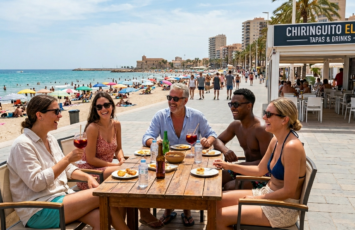
Spanish culture is oriented toward the outdoors. Community life takes place in squares, terraces, cafes, and local markets.

  • Everyday greetings: when entering a small shop, a bakery, or a lift, it is a basic rule of courtesy to say “¡Hola, buenos días!” or “Buenas tardes”, and say goodbye with a “Gracias, ¡adiós!”.
  • Physical contact and tone of voice: conversations are usually expressive, lively, and in a loud tone of voice. Light physical contact or speaking at a closer distance is normal and denotes warmth. Interruptions during a conversation often reflect enthusiasm for the topic, not bad manners.
  • The “Sobremesa”: when dining with locals, do not get up immediately after dessert. The sobremesa is the custom of staying around the table sharing conversation, coffee, or drinks for an hour or more after finishing the meal.

6. What is the housing market like in Spain?

A vital aspect of landing in the country is the home search. When looking for a flat, always compare housing prices carefully and consult with established local estate agencies.

How much it costs to buy a house in Spain

Balearic Islands €5,441 €435,310
Madrid €5,410 €432,808
Basque Country €3,925 €314,006
Catalonia €3,418 €273,412
Canary Islands €3,374 €269,891
Spain (Average) €3,133 €250,673
Andalusia €2,990 €239,206
Valencian Community €2,873 €229,822
Cantabria €2,746 €219,696
Navarre €2,386 €190,843
Asturias €2,378 €190,218
Galicia €2,261 €180,857
Murcia Region €2,191 €175,248
Aragon €1,948 €155,878
La Rioja €1,938 €155,068
Castile and León €1,816 €145,281
Castile-La Mancha €1,407 €112,595
Extremadura €1,352 €108,178

Source: Fotocasa, data updated to June 2026

The average price of buying a home in Spain in June 2026 is €3,133/m2 (around €250,673 for an 80 m2 property), according to Fotocasa data. This price varies significantly depending on the autonomous community. The Balearic Islands and Madrid are the most expensive regions, with housing prices at €5,441/m2 (€435,310 for an 80m2 property) and €5,410/m2 (€432,808 for an 80m2 property) respectively.

How much it costs to rent a home in Spain

Madrid €21.96 €1,756.80
Catalonia €19.30 €1,544.00
Balearic Islands €19.10 €1,528.00
Basque Country €17.55 €1,404.00
Canary Islands €16.28 €1,302.40
Valencian Community €14.79 €1,183.20
Spain (Average) €14.76 €1,180.80
Cantabria €13.78 €1,102.40
Navarre €12.85 €1,028.00
Andalusia €12.38 €990.40
Asturias €12.26 €980.80
Aragon €11.98 €958.40
Galicia €10.74 €859.20
Murcia Region €10.68 €854.40
La Rioja €10.27 €821.60
Castile and León €10.24 €819.20
Castile-La Mancha €9.09 €727.20
Extremadura €7.57 €605.60

Source: Fotocasa, data updated to May 2026

Renting a home in Spain, on the other hand, costs on average €14.76/m2, around €1,180.80 for an 80m2 property, according to Fotocasa data updated in May 2026.

Conducting a rigorous market study will not only protect you from paying an inflated or unbalanced price, but it also helps prevent speculation and avoids contributing to the disproportionate rise in rental prices in traditional neighborhoods, something that local residents in your new community will greatly appreciate.

On portals like Fotocasa you will be able to find thousands of homes, get to know the market, and compare prices.

7. Is it necessary to learn Spanish if you want to move to Spain and integrate into your neighborhood?

Although more and more people speak English in tourist areas and large international cities, learning Spanish is essential if you want to truly integrate. Mastering the language is not only key out of politeness and respect toward your host country, but it is indispensable for sorting out daily bureaucracy, looking for a rental, visiting the doctor, and building real relationships with your neighbors.
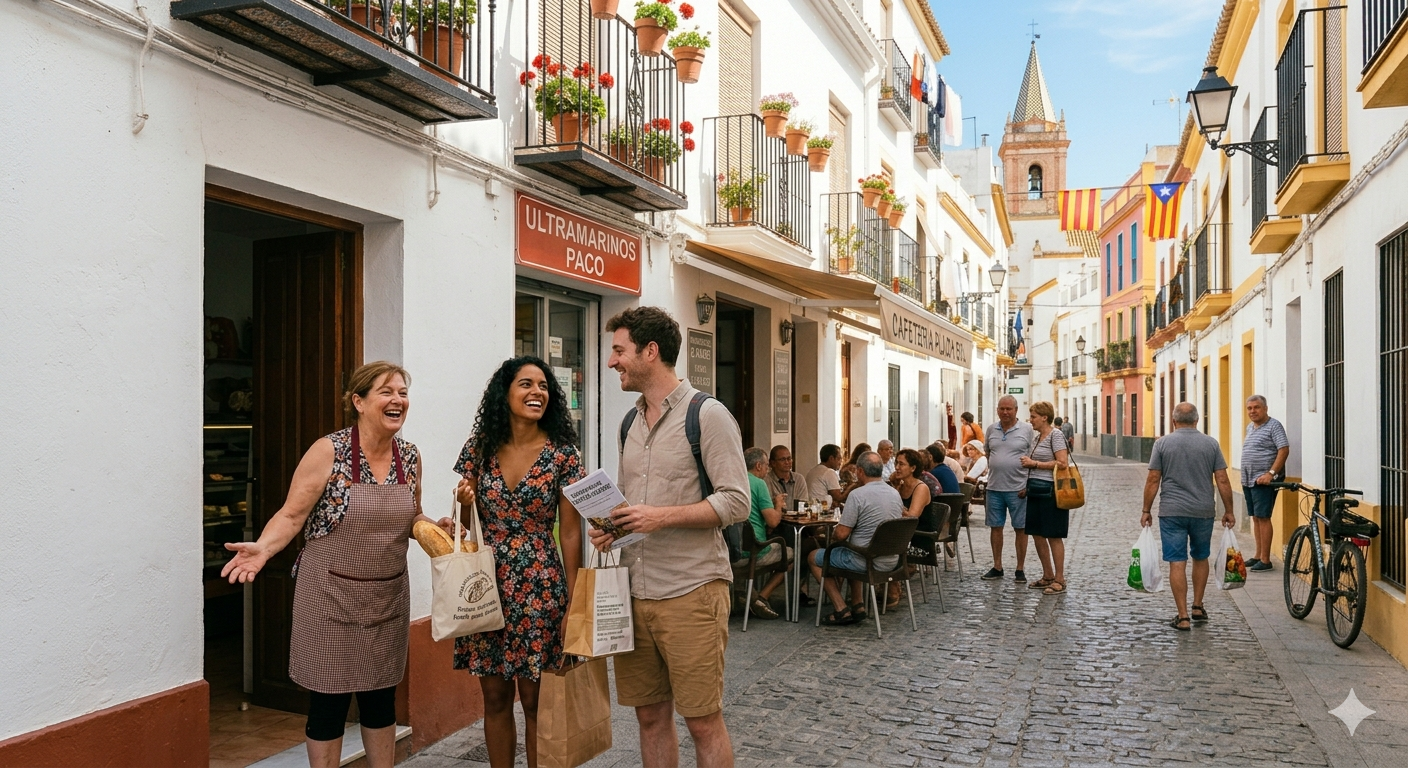

The gap between living in Spain as an expat and truly integrating closes when you leave the international bubble behind and dare to stammer your first words with the neighbors.

What other languages are spoken in Spain?

Spanish (or Castilian) is the official language throughout the country, but Spain is a multilingual state. There are several co-official languages that carry enormous cultural and institutional weight in their respective regions:

  • Catalan / Valencian: Spoken in Catalonia, the Balearic Islands, and the Valencian Community.
  • Galician: Spoken in Galicia (northwestern Spain).
  • Euskera (Basque): Spoken in the Basque Country and part of Navarre. It is a unique language with no known relation to any other tongue.

Tip: Learning even a few basic words of the language of the region you move to will immediately open the hearts of the locals. There are many courses to learn local languages, some of them even free.

Practical tips to learn Spanish and improve your fluency

  • Use technology to your advantage: Start before you move with learning apps or sign up for online classes on platforms like the Instituto Cervantes.
  • Mix with local people: Avoid expat ghettos where only your native language is spoken. Step out of your comfort zone and force yourself to interact in Spanish.
  • Become a “regular” in your neighborhood: Choose a small cafe, a greengrocer, or a market stall and always go to the same one. The daily greeting will progress from a simple “Hola” to a short conversation with the shopkeeper, giving you a safe and confident environment to practice.

8. How to meet local people in Spain?

Avoid falling into the temptation of staying trapped solely in an international resident bubble. Here are some ideas to meet local people in Spain and start feeling part of the neighborhood:

  • Sign up for a “Language Exchange”: This is the easiest, pressure-free way to meet locals. You will meet with people who want to practice your native language while you improve your Spanish in a relaxed environment (usually a bar or cafe).
  • Look for social media groups: Use platforms like Facebook or Meetup to find face-to-face activities in your city (exchanges, dinner meetups, book clubs, or running groups).
  • Pursue your hobbies in the real world: Join a local hiking club, cooking classes, pottery workshops, or play padel (the reigning racket sport in daily Spanish life) or football. Sharing a passion softens any cultural barrier.
  • Volunteer at a local association: In Spain, the neighborhood fabric is very important. Most neighborhoods in Spain have their own associations, with committees that organize festivals and events for the local residents to enjoy. Joining one of these associations is one of the best ways to meet local people while immersing yourself 100% in Spanish culture.
  • Sign up for workshops at Civic Centers: Civic centers are municipal public spaces designed to foster citizen cohesion and neighborhood development. These centers usually organize quarterly workshops where you can learn everything from crocheting to playing the ukulele. It is a great way to learn new hobbies while surrounding yourself with local people. Important: make sure to check when registration opens, because places often fly.

Integrating into your neighborhood in Spain takes time, a bit of patience with administrative bureaucracy, and, above all, the flexibility to adjust your biological clocks to a new solar and social rhythm. However, the effort pays off handsomely. The Spanish lifestyle is characterized by prioritizing day-to-day enjoyment, human warmth, and community life on the street.

As soon as you stop mentally translating the schedules and start enjoying a good sobremesa, you will realize that you are no longer an outsider looking in: you will have become just another neighbor.

Which city or region in Spain are you planning to move to, and what intimidates you the most about this shift in schedules?

At Fotocasa, we have an excellent team of professionals dedicated to creating relevant content for our readers. If you enjoyed this article, we would be delighted if you published it on your website. In that case, please remember to credit Fotocasa as the original source. Thank you for your support.

Editorial Integrity of Fotocasa Life

0 Comentarios
Más antiguo
El mas nuevo