If smoke constantly invades the windows of neighboring properties, the community has legal tools to warn you or ban the use of the barbecue.
On the other hand, if you want to build a brick barbecue on your terrace, you will strictly need a town hall license and the unanimous permission of your neighbors, as it alters the exterior aesthetics of the building. Remember that fines for lighting fires without authorization on forest or public land are extremely high and reach up to one million euros in places like Madrid.
Can you smoke or vape in public spaces in Spain?
In Spain, it is allowed to smoke in public spaces as long as they are outdoors. An outdoor space is considered: “any uncovered space or any covered space that is laterally surrounded by a maximum of two walls, sides, or structures.” (Art. 2.2)
However, it is strictly forbidden to smoke in any enclosed public space, workplaces, and public transport. In addition, the use of vapes, electronic cigarettes, and heated tobacco devices is completely equated by law to traditional tobacco, meaning they have the exact same prohibitions.
Can you smoke on beaches and outdoor terraces?
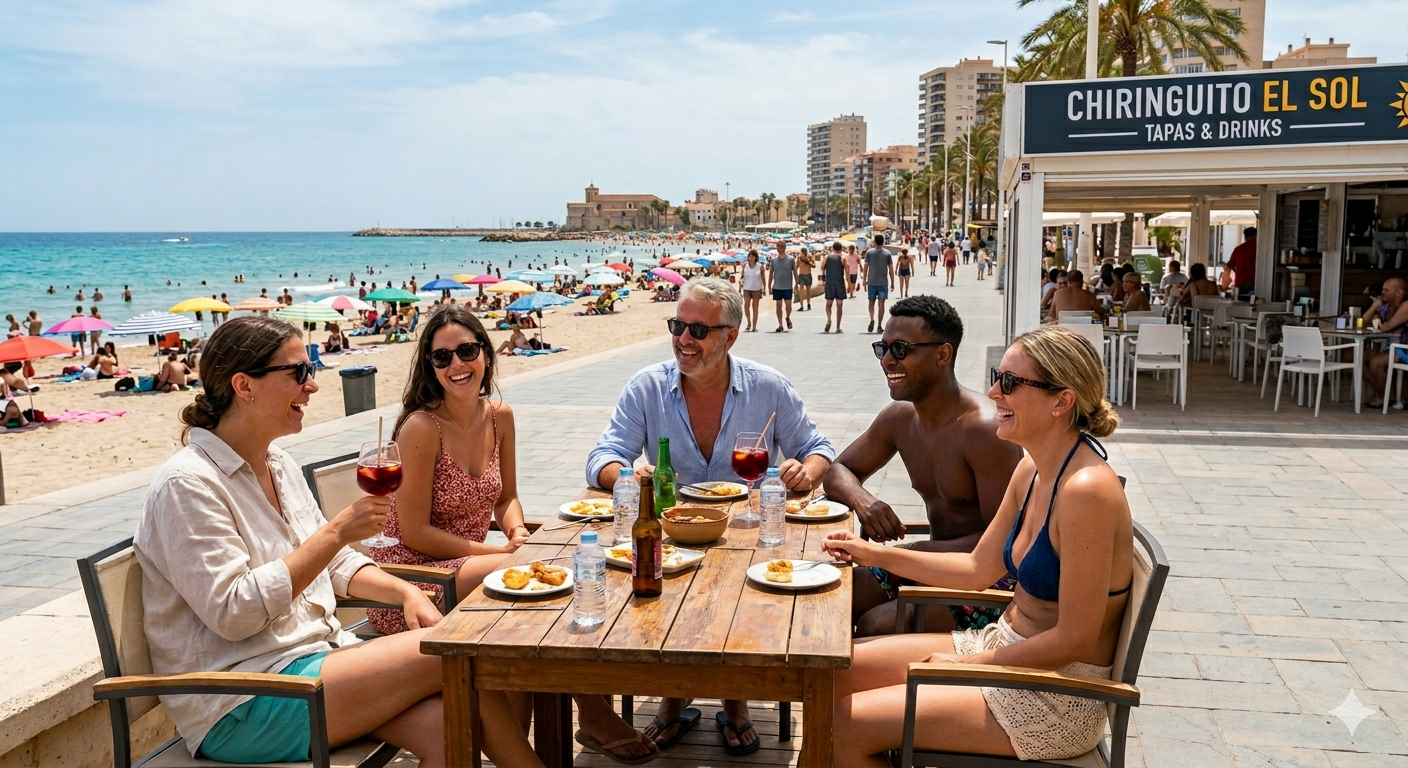
Currently, smoking is permitted on the terraces of bars and restaurants, provided they are completely open (the enclosed surface area cannot exceed 50% of the terrace). However, this is something that is currently being debated.
Furthermore, beaches in areas like Barcelona and the most popular coastal areas in the Balearic and Canary Islands have been legally declared smoke-free zones. If you break the rule in a restricted outdoor area, you face fines ranging from €30 to €2,000.
Can you drink alcohol in public spaces (the famous “botellón”)?
As a general rule, in Spain it is completely forbidden to drink alcohol in the street, squares, or public parks. This social practice of gathering on public roads to consume alcoholic beverages is locally known as “hacer botellón”.
This ban is applied very strictly to avoid disruptive noise at late hours, accumulation of dirt, and coexistence issues with the neighborhood. The only valid exceptions are authorized bar terraces or spaces specifically opened by local councils during fairs or local festivities. The fine for breaking this rule and consuming alcohol in the street ranges from €100 to €600.
Respect the peace of your neighbors: times for making noise in Spain
Although Spaniards love enjoying the good weather and making plans until late, it is fundamental to respect the neighbors’ rest. As a general rule, local ordinances prohibit making excessive noise that disrupts sleep, both inside and outside the home, during night hours.
The hours for making noise change depending on the municipality. As a general rule, in Spain it is allowed to make moderate noise between 08:00-09:00h and 21:00-22:00h, depending on the town. Weekends and holidays may vary, and some localities have specific regulations that control noise even by zones.
Can you practice nudism on beaches in Spain?
Although technically there is no national law in Spain prohibiting nudism on beaches, most people prefer to go to one of the many nudist beaches that exist in the country.
Is it legal to go topless in Spain?
Going topless is permitted and is standard practice on many Spanish beaches. However, in municipal swimming pools you will have to check local regulations. In private pools (for example, those of a community of owners), the regulations will depend on the owners.
The queuing system in shops
When entering traditional shops like bakeries, butchers, or neighborhood greengrocers where there is no ticket number machine, you won’t always see a neat single-file queue. The most common thing to do is ask out loud when entering: ¿Quién es el último? (Who is the last person?). The person who goes just before you will answer, and that way you will know exactly when it is your turn.
Additionally, locals usually say hello when entering shops, especially if they are small establishments or neighborhood businesses.
Obligations when walking dogs
Spain is a country that loves pets, but cities take hygiene very seriously. In addition to the mandatory cleanup of dog waste, urban regulations require you to carry a bottle of water mixed with disinfectant or vinegar to clean up your dog’s urine from facades or street furniture, under risk of severe fines.
Furthermore, many cities apply restrictions for taking your pets on public transport.
Is it legal to take photos of people in the street in Spain? Remember not to take pictures of locals
In general, it is legal to take photos of people in the street as long as they are for personal use and the individuals are not the main focus of the photo (for example, if you are taking a photo of a monument and people appear in the background). If you want to take a photo of a specific person because they caught your attention, always ask for permission first.
The August exodus and reduced summer hours in Spain
August is one of the most popular months for going on holiday, so you will see that many cities get “emptied” of locals.
Due to the extreme heat of July and August, many public offices (including immigration offices to process your identity card or TIE) adopt an “intensive schedule”, working only from 8:00 to 14:00. Additionally, many small family-owned businesses close for holidays the entire month of August, so any administrative procedure can be much slower.
Rules for cycling around the city in Spain
Although there are some exceptions in cities like Barcelona, as a general rule, it is completely forbidden to ride a bicycle on pavements and pedestrian zones, as these are for the exclusive use of pedestrians. Failing to comply with this carries fines of between €100 and €200, so you must always ride on designated cycle lanes or on the road. You can only be on the pavement if you push your bike while walking (where the law considers you a pedestrian), if there is a painted cycle lane, or if you are under 14 years old accompanied by an adult.
Helmets are mandatory in the city for minors under 16, you cannot cycle across pedestrian crossings, and the maximum blood alcohol limits are the same as for cars (0.5 g/l in blood).
Coexistence rules for living in Spain in summer
| Activity or Infringement |
General Regulation |
Estimated Penalty |
| Walking shirtless through the center |
Prohibited by local ordinance away from the beach |
From €100 to €750 |
| Smoking/vaping on terraces or restricted beaches |
Prohibited in regulated outdoor public spaces |
From €30 to €2,000 |
| Consuming alcohol in the street (“botellón”) |
Prohibited on public roads (except terraces and fairs) |
From €100 to €600 |
| Bicycles on the pedestrian pavement |
Prohibited (except marked lanes or minors under 14) |
From €100 to €200 |
| Domestic noise outside hours |
Allowed M-F (8h to 21/22h) and holidays (9:30h to 21h) |
Warning and police intervention |
Enjoying the summer in Spain like just another resident means understanding that the country’s lively social life is closely linked to a framework of community respect.
Adapting to small details like the correct use of bicycles or complying with quiet hours at home will save you financial headaches and guarantee a wonderful coexistence with your new neighbors.
The key to summer success boils down to acting with empathy, civic respect, and common sense.
Are there any of these rules you didn’t know about? Tell us in the comments.







 Your home in Spain