
Map of the spanish coast: The best beach towns to live in

Fotocasa is the expert real estate portal if you are looking for your home in Spain and want to resolve your doubts about housing

Patricia Andrés
Patricia Andrés Experta en el sector inmobiliario

Promedio de puntuación 5 / 5. Recuento de votos: 1

Hasta ahora, ¡no hay votos!. Sé el primero en puntuar este contenido.

  • Spain has 7,661 km of coastline where the wild climate of the Atlantic and the calm of the Mediterranean coexist.
  • Donostia-San Sebastián is the most expensive coastal city to buy a home (€7,148/m²), while A Coruña and Vigo offer the most competitive prices (approx. €3,150/m²), according to Fotocasa for April 2026.
  • Valencia solidifies its position as a benchmark international destination after being chosen as the best city in the world to live in by Forbes magazine in 2024.

Many of us dream of waking up every morning to the sound of the waves or having the chance to take a stroll along the sand at the end of the working day. Spain is, without a doubt, one of the best places in the world to make this wish come true.

From Fotocasa, we have analyzed the coastline map to explain to you how the Spanish coasts are divided and which are the cities that best combine urban life with the maritime environment. In this article, you will discover the differences between the Atlantic and the Mediterranean, the cost of housing in the most popular cities, and the key services for those looking for their ideal residence.

But, do you know which are the coasts of Spain and which ones have the best cities to live in?

Which are the coasts of Spain and how are they divided?
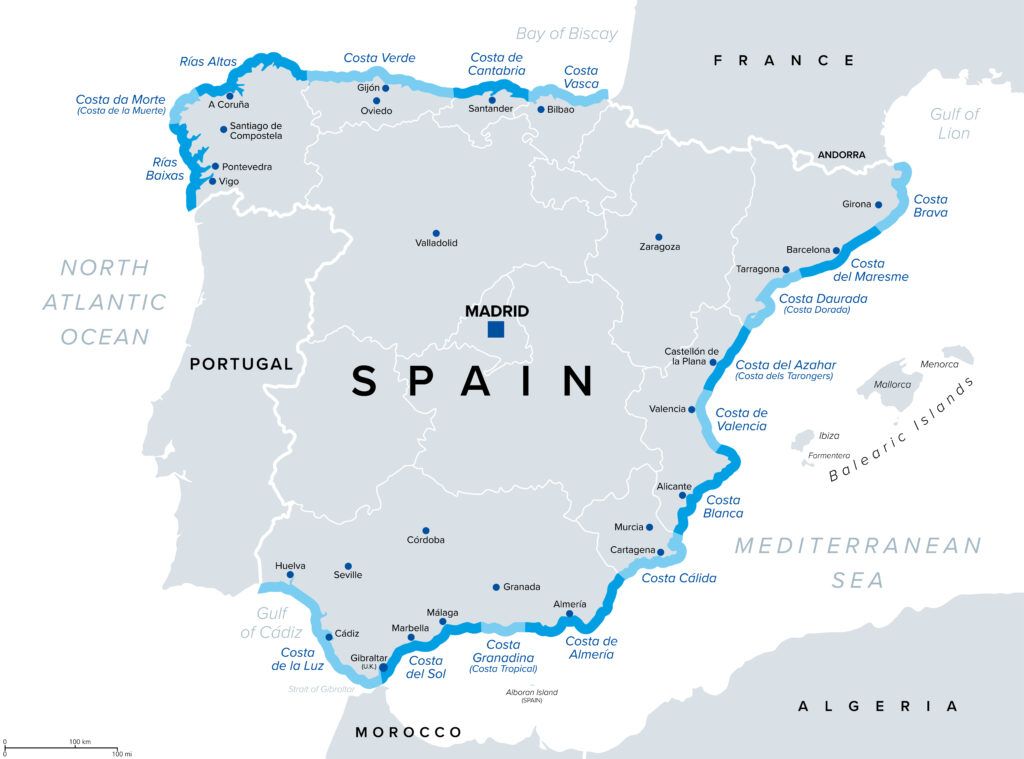
Mapa de las costas de España - Getty Images

Map of the coasts of Spain – Getty Images

The coasts of Spain are divided into two main major groups: those washed by the Atlantic Ocean and those washed by the Mediterranean Sea. According to official data, Spain has around 7,661 km of coastline, spread across the mainland coast, the archipelagos of the Balearic Islands and the Canary Islands, the autonomous cities of Ceuta and Melilla, and the places of sovereignty in North Africa.

The Coastline of the Atlantic Ocean and the Cantabrian Sea

This slope is characterized by its colder waters, marine currents, and constant winds. In the north, the landscape stands out for its cliffs and spectacular gastronomy. These are the Spanish coasts washed by the Atlantic and the Cantabrian Sea:

  • Rías Baixas: They belong to the Galician coast, with cold Atlantic waters.

  • Rías Altas: Also in Galicia, with a more unstable climate.

  • Mariña Lucense: Meeting point between the Atlantic and the Cantabrian Sea, known for its strong currents.

  • Costa Cantábrica: Formed from west to east by the Costa Verde (Asturias), the Costa Cántabra, and the Costa Vasca.

  • Costa de la Luz: Comprises the coastline of Huelva and Cádiz, in the southwestern mainland.

  • Canary Islands: Atlantic archipelago with volcanic landscapes and ideal days for fishing.

Coasts of the Mediterranean Sea and Balearic Islands

The Mediterranean coast offers better temperatures, calm waters, and crystal-clear beaches most of the year. It is the area with the most subdivisions and great appeal for sailing. These are the Spanish coasts washed by the Mediterranean Sea:

  • Costa Brava: The northernmost coastline, in Girona.

  • Costa del Maresme: Located in the province of Barcelona.

  • Costa Daurada: In the province of Tarragona.

  • Costa del Azahar: Runs along the province of Castellón.

  • Costa de Valencia: The coastline of the Valencian province.

  • Costa Blanca: Located in the province of Alicante.

  • Costa Cálida: Corresponds to the Region of Murcia.

  • Costa de Almería: The eastern coastline of Andalusia.

  • Costa Tropical: Located in the province of Granada.

  • Costa del Sol: The famous coastal strip of the province of Málaga.

  • Balearic Islands: The Mediterranean island paradise, key destination for scuba diving and unspoiled coves.
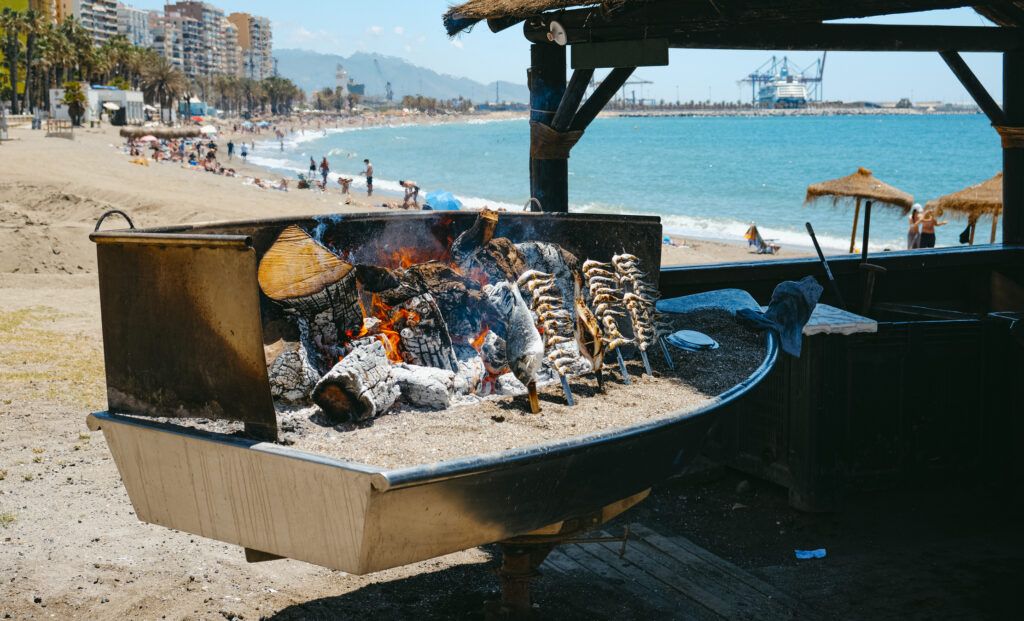
While the Atlantic offers wild landscapes and cliffs, the Mediterranean is defined by calm seas and ideal temperatures for swimming.

Which are the best beach cities in Spain to live in?

Málaga, Valencia, Barcelona, San Sebastián, Vigo, A Coruña, and Palma de Mallorca are the 7 cities chosen by the prestigious British publication The Times in its list of the best European city breaks that combine a city and a brilliant beach. These destinations are not only ideal for a one-off visit, but they also position themselves as privileged places to buy a house and reside, thanks to their cultural offer, services, and natural environment.

Below, we analyze the selected cities and the cost of buying a home in each of them:

What it is like to live in Málaga

Playa de la Malagueta-Málaga-Getty Images

Playa de la Malagueta-Málaga-Getty Images

Málaga has transformed into a technological and cultural hub, while maintaining its Mediterranean essence and an enviable climate with more than 300 days of sunshine a year. It is an excellently connected city thanks to the Málaga-Costa del Sol Airport (AGP), the fourth busiest in Spain, and its AVE high-speed train station that links it to Madrid in less than three hours.

Among its highlights, the Picasso Museum, its renovated port (Muelle Uno), and the La Malagueta Beach stand out, just a stone’s throw away from the historic center. Currently, the purchase price in the capital stands at €3,619/m², which represents an approximate investment of €289,520 for an 80 m² property, according to Fotocasa data for April 2026.

What it is like to live in Valencia

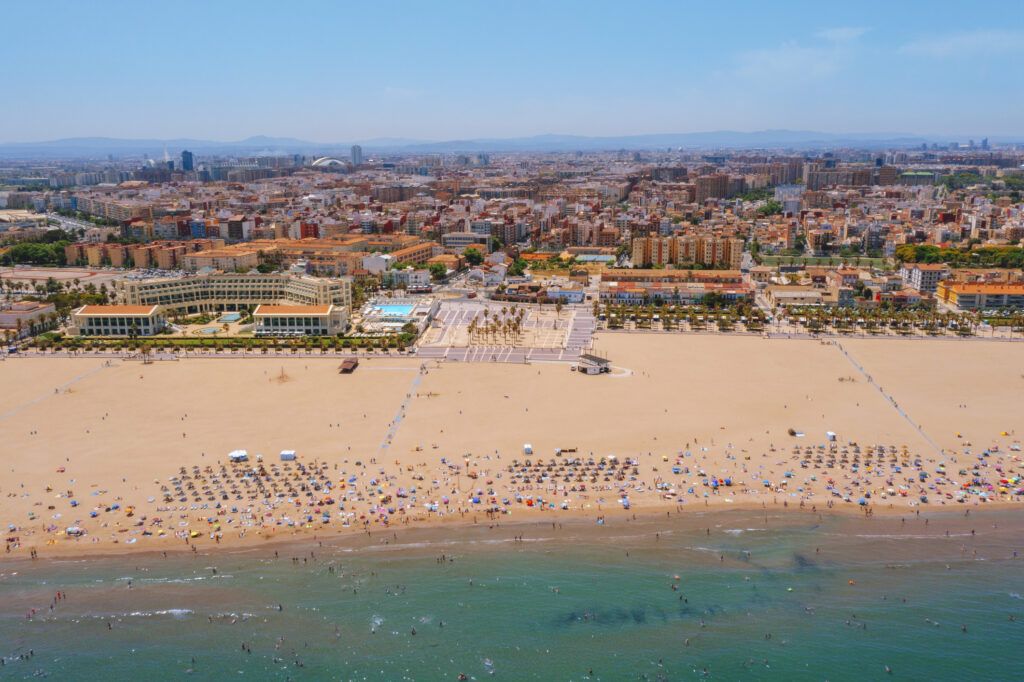
Playa de la Malvarrosa, Valencia - Getty Images

Playa de la Malvarrosa, Valencia – Getty Images

Valencia offers a perfect balance between modernity and tradition, with the Turia Garden running through the city and the avant-garde City of Arts and Sciences. Its beaches, such as Malvarrosa and Las Arenas, are wide and feature a lively promenade packed with local gastronomy.

It is a very cyclist-friendly city and well-connected by high-speed train. As for the real estate market, the average price is €3,694/m², reaching €295,510 for a standard 80 m² apartment, according to Fotocasa data for April 2026.

Valencia is the best city in the world to live in, according to Forbes magazine.

What it is like to live in Barcelona

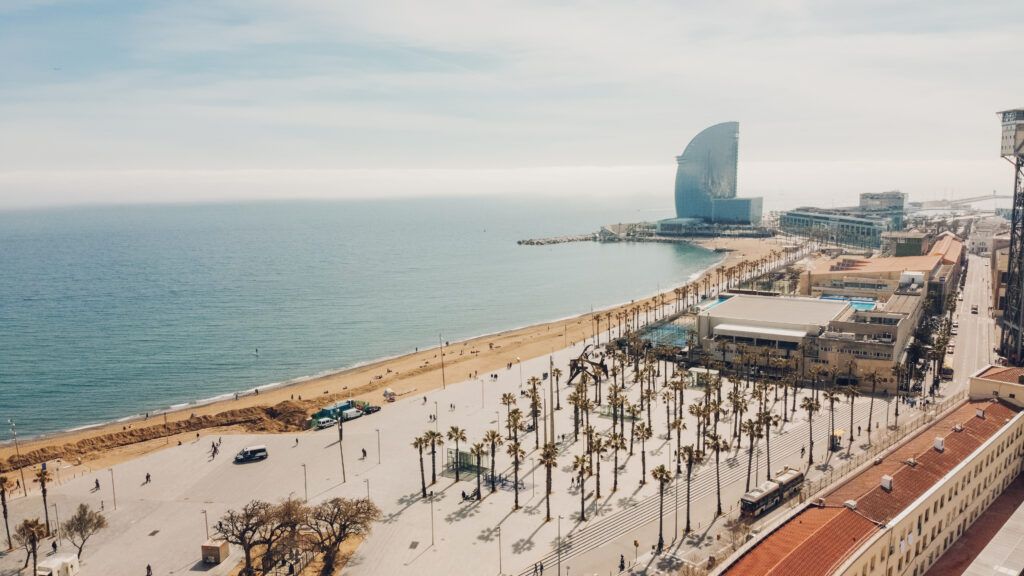
Playa de la Barceloneta, Barcelona - Getty Images

Playa de la Barceloneta, Barcelona – Getty Images

The Ciudad Condal is the coastal metropolis par excellence, where Gaudí’s modernist architecture coexists with the sea. It offers massive international connectivity through El Prat Airport and a highly dense public transport network.

Living in Barcelona allows you to enjoy a top-tier job market and cultural scene without giving up beaches like Barceloneta or Bogatell. It is one of the most demanding markets, with a purchase price of €5,399/m², which raises the cost of an 80 m² apartment to around €431,943, according to Fotocasa data for April 2026.

What it is like to live in San Sebastián/Donostia

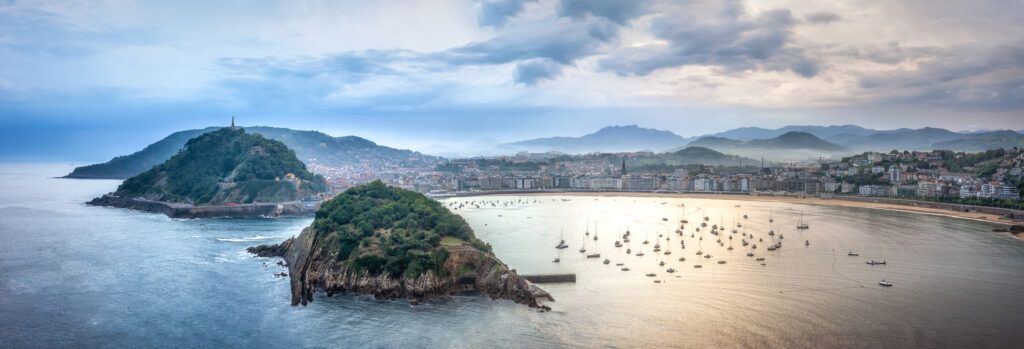
Playa de la Concha, San Sebastián - Getty Images

Playa de la Concha, San Sebastián – Getty Images

Donostia is synonymous with elegance and haute gastronomy (being one of the cities with the most Michelin stars per square meter). Its iconic La Concha Beach is considered one of the best urban beaches in the world. Although its airport is small, it is very close to the French border and well-connected by road and train with the rest of northern Spain.

San Sebastián is, historically, the most expensive city to buy a home: the square meter reaches €7,148, placing an 80 m² apartment at €571,859, according to Fotocasa data for April 2026.

What it is like to live in Palma de Mallorca

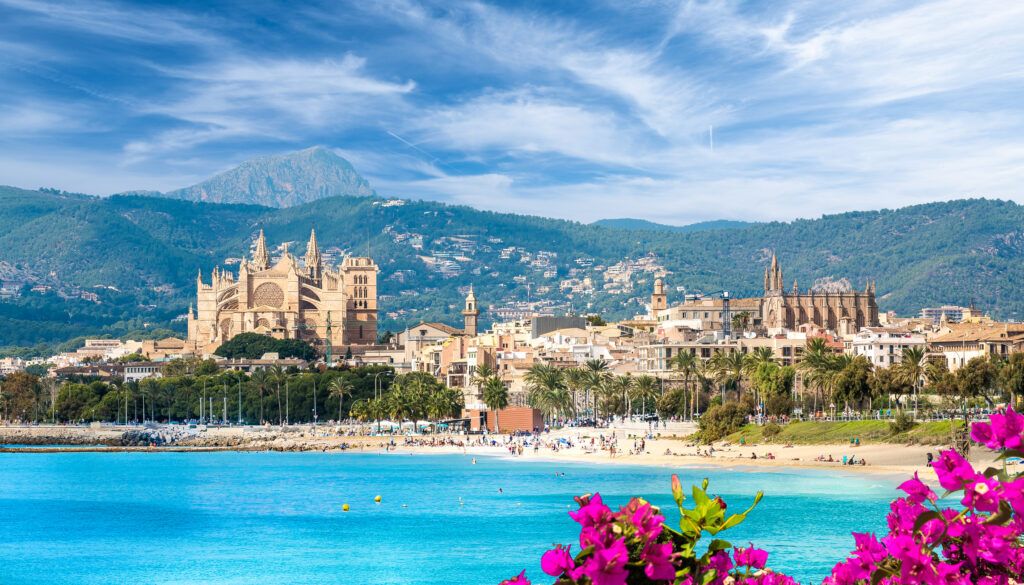
Catedral de Palma de Mallorca, España - Getty Images

Catedral de Palma de Mallorca, España – Getty Images

Living in Palma means enjoying a charming medieval historic center and the exclusivity of a Mediterranean island with big-city services. Its airport (Son Sant Joan) is a key hub with direct connections to all of Europe, especially in summer.

It stands out for its Gothic cathedral facing the sea and nearby coves with crystal-clear waters. The average purchase price is €5,169/m², which implies an outlay of €413,508 for an 80 m² property, according to Fotocasa data for April 2026.

What it is like to live in Vigo and the Cíes Islands

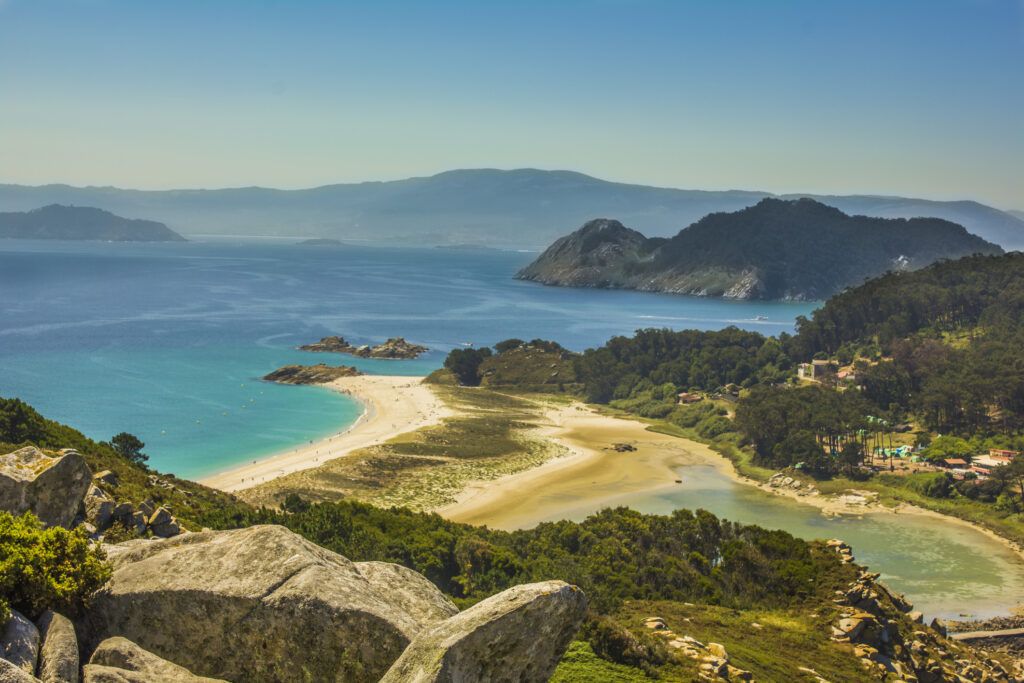
Islas Cíes - Getty Images

Islas Cíes – Getty Images

Vigo stands out for its unique topography in the Ría de Vigo and for being the gateway to the natural paradise of the Cíes Islands. It is a city with a strong seafaring identity, unbeatable seafood gastronomy, and a green environment surrounding it. Although its airport (Peinador) has fewer direct international connections, it is well-connected to the rest of Galicia and Portugal.

It is one of the most affordable options on the list, with a price of €3,153/m², with an 80 m² apartment costing around €252,262, according to Fotocasa data for April 2026.

What it is like to live in A Coruña

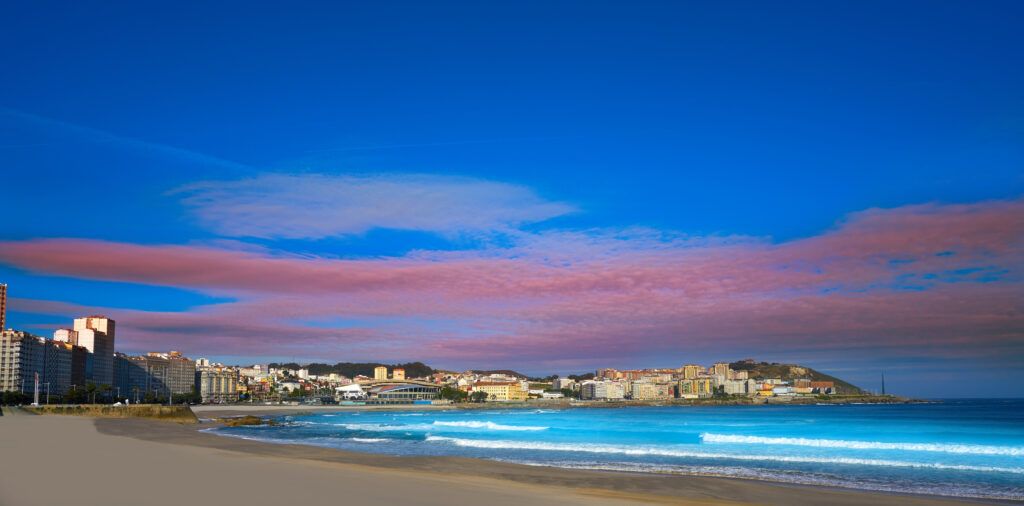
Playa de Riazor, la Coruña, Getty Images

Playa de Riazor, la Coruña, Getty Images

The “City of Glass” is ideal for those looking for an Atlantic lifestyle in a dynamic city with a lot of history. Its promenade is one of the longest in Europe and Riazor Beach is fully integrated into the heart of the city. It features Alvedro Airport and a good rail connection with the rest of the Atlantic axis.

The price of housing is highly competitive compared to the Mediterranean, standing at €3,149/m², which equates to €251,920 for an 80 m² property, according to Fotocasa data for April 2026.

How much does it cost to buy a house in the main coastal cities of Spain in 2026?

The most expensive cities to buy a house on the coast in Spain are generally located in the Balearic Islands and Northern Spain. The most budget-friendly prices are usually found in the areas of the Costa de Valencia and the Costa Blanca, and on the coasts of southern Spain.

Ranking of purchase prices in the main coastal cities of Spain (2026)

City / Municipality Area Price €/m² Price 80m² property
Santa Eulària des Riu Ibiza €8,639 €691,133
Sant Antoni de Portmany Ibiza €8,460 €676,821
Eivissa Ibiza €7,613 €609,013
Calvià Mallorca €7,388 €591,020
Sant Josep de sa Talaia Ibiza €7,155 €572,426
Donostia – San Sebastián Costa Vasca €7,148 €571,859
Andratx Mallorca €7,037 €562,972
Zarautz Costa Vasca €6,653 €532,203
Sitges Costa del Garraf €6,228 €498,238
Marbella Costa del Sol €5,730 €458,422
Benahavís Costa del Sol €5,722 €457,742
Barcelona Costa de Barcelona €5,399 €431,920
Palma de Mallorca Mallorca €5,169 €413,508
Estepona Costa del Sol €5,105 €408,439
Fuengirola Costa del Sol €5,095 €407,626
Nerja Costa del Sol €5,072 €405,762
Adeje Tenerife Sur €5,008 €400,657
Calpe / Calp Costa Blanca €4,861 €388,894
Tarifa Costa de la Luz €4,756 €380,514
Valencia Costa de Valencia €3,694 €295,510
Málaga Costa del Sol €4,250 €339,994
Alicante Costa Blanca €2,973 €237,872
Cullera Costa de Valencia €2,690 €215,162
Gandía Costa de Valencia €1,868 €149,435
Torrevieja Costa Blanca €3,150 €251,984
Peñíscola Costa del Azahar €2,701 €216,042

Source: Fotocasa, data for April 2026

If you are looking for exclusivity and budget is not an issue, San Sebastián is your destination. If you prefer a balance between price and Mediterranean quality of life, Valencia positions itself as the most well-balanced option in 2026.

Demand in secondary coastal cities (such as Vigo or A Coruña) is expected to continue growing due to the rise in remote work, which could put upward pressure on prices in the coming years.

If you are thinking about buying a house on the coast, we recommend our article “How to buy a home in Spain for the first time”.

At Fotocasa, we have an excellent team of professionals dedicated to creating relevant content for our readers. If you enjoyed this article, we would be delighted if you published it on your website. In that case, please remember to credit Fotocasa as the original source. Thank you for your support.

Editorial Integrity of Fotocasa Life

0 Comentarios
Más antiguo
El mas nuevo
Comentarios en línea
Ver todos los comentarios