Guide to buying a house in the Balearic Islands in 2026: which island and town to choose?

Fotocasa is the expert real estate portal if you are looking for your home in Spain and want to resolve your doubts about housing

Patricia Andrés
Patricia Andrés Experta en el sector inmobiliario

Promedio de puntuación 4.3 / 5. Recuento de votos: 3

Hasta ahora, ¡no hay votos!. Sé el primero en puntuar este contenido.

  • The average housing price in the Balearic Islands is €5,352/m² (€428,171 for an 80 m² property) in April 2026 according to Fotocasa data, with a year-on-year growth of 9.1%.
  • Mallorca leads real estate demand in 2026 due to its balance between services and connectivity, highlighting areas such as Palma and the southwest with average prices exceeding €5,169/m² (€413,508 for an 80 m² property) , according to March 2026 data from the Fotocasa Real Estate Index.
  • Menorca positions itself as the most affordable alternative for buyers seeking tranquility and nature, with an average price in the capital of €3,471/m² (€277,660 for an 80 m² property) according to the sector report by Fotocasa.
  • Ibiza and Formentera represent the most exclusive and high-value growth segment of the Balearic Islands, where supply shortages and the luxury profile keep prices at historic highs for buying a house.

Are you thinking about a change of scenery and establishing your residence in the Mediterranean?

The Balearic Islands have consolidated themselves as one of the most desired environments to live thanks to their safety, climate, and quality of life. However, each island offers a very different pace of life and real estate market dynamics.

In this guide, we analyze housing prices in the Balearics and explore the best areas according to your profile, whether you are a family looking for services and schools, a professional opting for remote work in natural surroundings, or someone seeking the exclusivity of the Pityusic Islands.

Which is the best Balearic island to move to according to your budget and lifestyle?

How much does it cost to buy a house in the Balearic Islands in 2026?

The Balearic real estate market is characterized by high demand and limited supply, which places its prices among the highest in Spain. In April 2026, the average price in the region stands at €5,352/m², which represents an investment of €428,171 for an 80 m² property, according to Fotocasa data.

Baleares is the second region with the highest price per square meter in Spain, only surpassed by Madrid in 2026

According to the Fotocasa 2025 Balearic Islands Housing Report, the demand for primary residences by domestic buyers and resident foreigners keeps prices at high levels, despite a slight monthly stabilization. In April 2026, the year-on-year variation reflects a growth of 9.1%. This trend indicates that property values on the islands continue on a solid upward trajectory.

Housing price comparison in the Balearic Islands

Island Resident Profile Average Price m² 80 m² Property
Palma de Mallorca Families and Professionals €5,169/m² €413,508
Mahón (Menorca) Tranquility and Nature €3,471/m² €277,666
Ibiza Exclusivity and Luxury €7,613/m² €609,013

Source: Fotocasa Real Estate Index (April 2026).

Which is the best Balearic island to move to and buy a house?

The answer is that it depends. To choose your residence in the Balearic archipelago, the key lies in your priorities: Mallorca is the ideal choice if you are looking for year-round services, connectivity by sea and air, and a more balanced buying and selling market; Menorca is the destination for those who prioritize a slower pace of life and more competitive prices; and Ibiza and Formentera represent the choice for those seeking a lifestyle defined by exclusivity, luxury, and creativity in an incomparable setting.

From a real estate perspective, the investment varies drastically depending on the island: while in Ibiza average prices exceed €7,000/m², in Menorca it is possible to find more balanced options around €3,471/m². Mallorca, for its part, offers the widest range, with luxury areas coexisting with much more affordable inland municipalities.

Which of the Balearic Islands to choose in 2026

Island Buyer Profile Average Price Top Property Type
Mallorca Families and year-round residents High Penthouses, Fincas, Villas, and Apartments
Ibiza Lifestyle and exclusivity Very High Luxury villas and penthouses
Menorca Retirement and sustainability Medium-High Historic Townhouses, coastal apartments, villas, and fincas.
Formentera Exclusivity and privacy Maximum Fincas and designer residences

Source: Balearic Market Analysis, May 2026

What is it like to live in Mallorca? A balance between services and nature

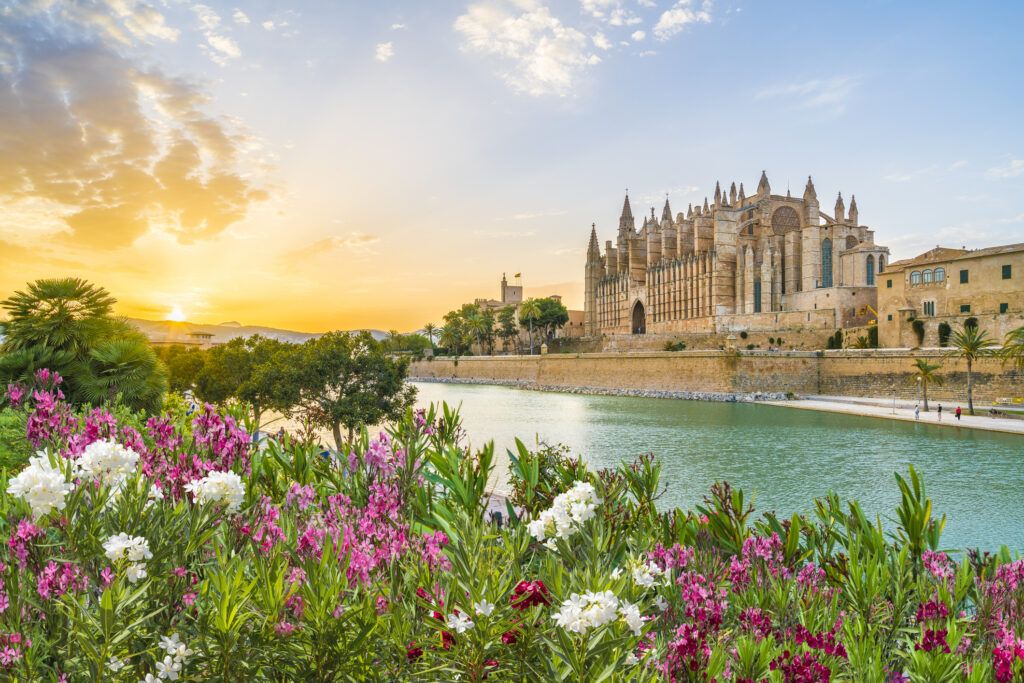
Catedral de Palma de Mallorca, España - Getty Images

Palma de Mallorca Cathedral, Spain – Getty Images

Living in Mallorca means enjoying an island with all the amenities. Its large size allows very different profiles to coexist: from the hustle and bustle of modern neighborhoods like Santa Catalina in Palma, to total disconnection in rustic fincas in municipalities like Santanyí.

Unlike other islands, Mallorca doesn’t “close” in winter: its international schools, top-tier hospitals, and its transport network remain operational 12 months a year.

According to the Fotocasa 2025 Balearic Islands Housing Report, Mallorca is the island that best retains its resident population thanks to its transport network and the quality of its educational and healthcare facilities, which guarantees that the island does not “close” during the winter months, unlike the smaller islands.

Mallorca offers the best connectivity in the archipelago, with an airport that links to major European capitals in less than 3 hours all year round.

The average price of a home in Palma de Mallorca in April 2026 is €5,169/m², according to Fotocasa data. For a typical 80 m² property, we would pay €413,508.

Which are the best areas to live in Mallorca?

The best area to live in Mallorca depends entirely on your profile: if you are looking for a cosmopolitan and urban life, your place is Palma; if you prefer an international family environment with all the luxuries, Calvià is the logical choice; for those looking for a refuge and authenticity, the Serra de Tramuntana has no rival; and if you are looking for quality of life at a more affordable price, the interior of the island offers the best value.

Living in Palma: the cosmopolitan heart of the Balearic Islands

Palma is much more than a holiday city; it is a nerve center that combines history with modernity. Neighborhoods like Santa Catalina or the Old Town offer an uninterrupted gastronomic and cultural selection. It is ideal for professionals and couples who want to have everything at hand without depending on a car. The average price of housing in Palma is €5,169/m², which represents an investment of €413,508 for an 80-square-meter home according to Fotocasa data for April 2026.

Living in Calvià: the refuge for international families

Areas like Santa Ponça or Bendinat in Calvià are the epicenter of the international community. Here you will find some of the best private schools on the island and exceptional sports infrastructure (golf and sailing). It is a very well-kept area where safety and proximity to family beaches are the strong points. The average price of housing in Calvià stands at €7,388/m², which represents a cost of €591,042 for an 80-square-meter property according to the April 2026 report.

Living in Sóller and Valldemossa: the luxury of the Serra de Tramuntana

For those who want to wake up surrounded by nature and traditional architecture. Living in the Serra (a World Heritage Site) offers fresh air and a slower pace, although with the limitation of a very small and protected housing supply. It is the preferred place for artists and profiles seeking privacy.

Living in Inca and the interior: authenticity and affordable connectivity

Inca, the capital of Raiguer, offers all the advantages of a small city with the benefit of being connected by train to Palma in just 30 minutes. It is the ideal area for young local families or residents looking for a spacious home without coastal prices, while maintaining access to all basic services. The average price of housing in Inca is €3,013/m², which translates into an investment of €241,007 for an 80-square-meter home as of April 2026.

What is it like to live in Menorca? The refuge of calm and sustainability

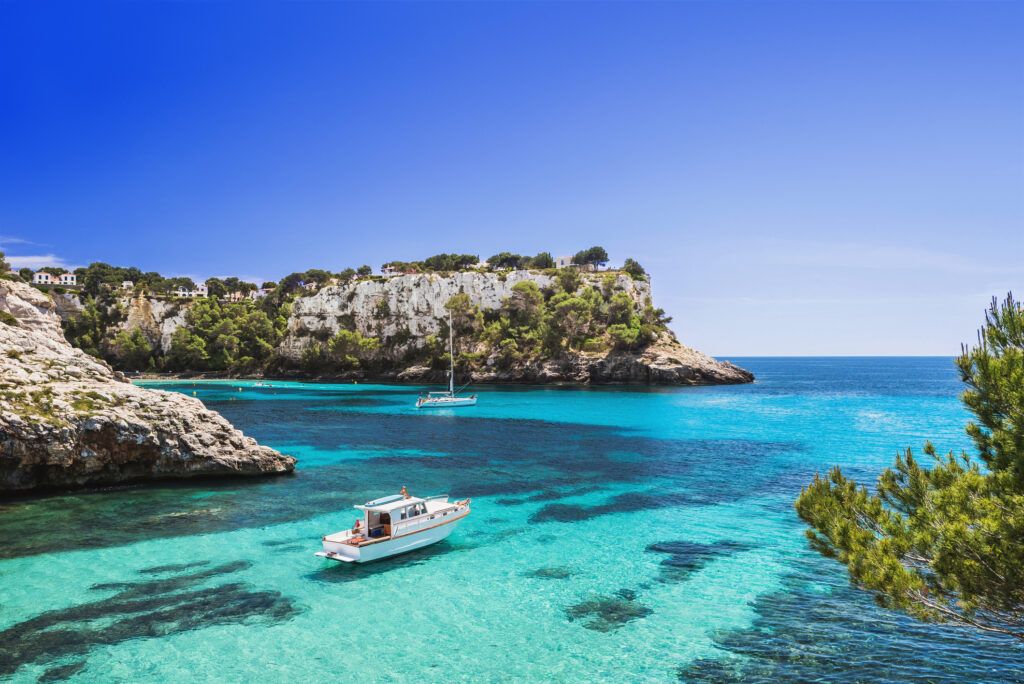
Cala Galdana, Menorca, España - Getty Images

Cala Galdana, Menorca, Spain – Getty Images

Living in Menorca means opting for a peaceful, safe lifestyle in permanent contact with an environment declared a Biosphere Reserve. Unlike other areas of the Mediterranean, Menorca has managed to preserve its authenticity, offering an ideal refuge for those looking to escape the urban bustle without giving up quality essential services. The island is perfect for families who value safety and for professionals who can remote work in an environment of absolute peace.

Living in Menorca means enjoying a protected environment where safety and proximity to nature are a daily standard.

According to the Fotocasa 2025 Balearic Islands Housing Report, Menorca is consolidating its position as one of the islands with the greatest price stability, attracting residents who look for quality of life over mass leisure options.

The average housing price in Mahón, the capital of Menorca, stands at €3,471/m², which represents an average investment of €277,666 for a standard 80-square-meter property, according to Fotocasa Real Estate Index data for April 2026.

Which are the best areas to live in Menorca all year round?

The best area to live in Menorca depends entirely on your profile: if you need services and stable employment, Maó and Alaior are the most practical options; if you are looking for an environment with a greater cultural wealth and historical charm, Ciutadella is your place; for retirees or those looking for light and the sea, Es Castell or Sant Lluís are ideal; and if you prefer rural authenticity, Es Mercadal offers the heart of the island.

What is it like to live in Maó? Services, employment, and urban life

The capital is the most practical spot to reside all year round. By hosting the main hospital, administrative centers, and the port, it guarantees that all services remain operational at all times. It is ideal for families and workers with stable employment who need quick connectivity to the airport and the mainland. The average housing price in Maó-Mahón is €3,471/m², which represents an investment of €277,666 for an 80-square-meter home according to Fotocasa data for April 2026.

What is it like to live in Ciutadella? History, culture, and social life

Located to the west, Ciutadella offers a vibrant historic center that keeps its pulse even in winter. It is the preferred area for culture lovers and families looking for a wide choice of schools and local shops in a monumental setting. It is also a magnet for remote workers seeking inspiration. The average housing price in Ciutadella de Menorca is €4,359/m², which represents a cost of €348,736 for an 80-square-meter property according to the Fotocasa report from April 2026.

What is it like to move to Alaior? The strategic heart of the island

Situated in the center of Menorca, Alaior offers an unbeatable location for moving to any point. It is a town with a very welcoming local community and a great educational offer, making it one of the areas with the best balance between tranquility and services for resident families. The average housing price in Alaior stands around €2,850/m², which translates into an investment of €228,000 for an 80-square-meter home according to current data.

Living in Sant Lluís and Es Castell: residential, international, and by the sea

These southeastern areas are perfect for those looking to live near Maó but in serener developments or towns with sea views. Es Castell stands out for its light and the Cales Fonts port, while Sant Lluís is famous for its international community and its detached houses in areas like Binibeca or Torret.

What is it like to live in Es Mercadal and Ferreries? Nature and slow life

Located in the rural center, they are the option for those looking for the most authentic Menorca. Es Mercadal, at the foot of Monte Toro, offers a traditional village life with quick access to the northern beaches. It is an ideal environment for lovers of hiking and Menorcan gastronomy. The average price in Es Mercadal stands at €3,280/m², which carries an investment of €262,400 for an 80-square-meter home according to the latest Fotocasa data.

What is it like to live in Ibiza and Formentera? Exclusivity and Mediterranean essence

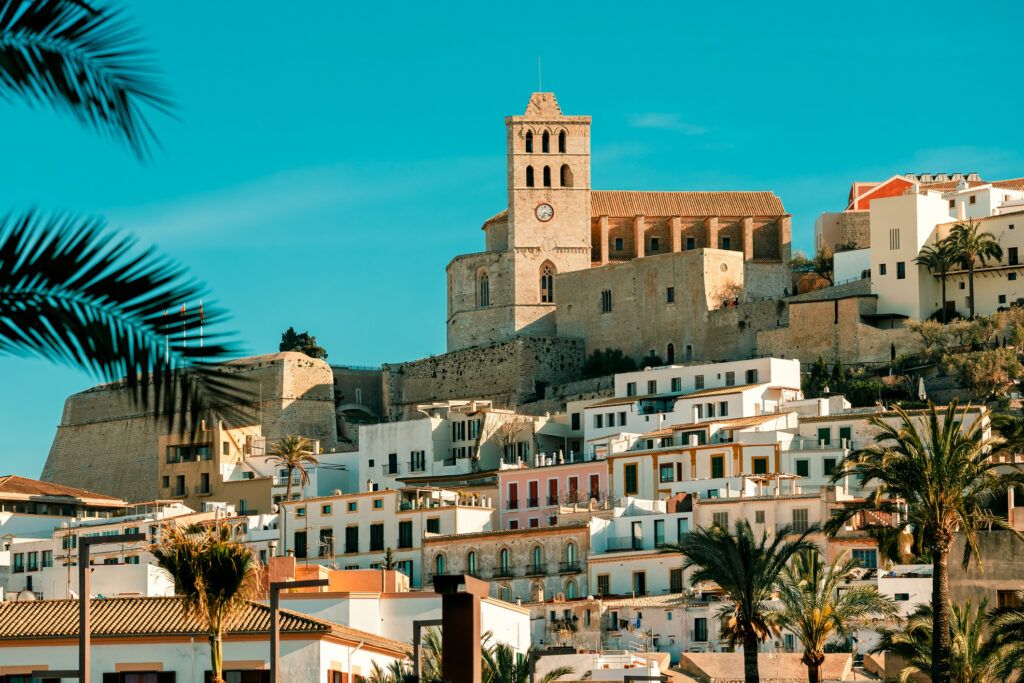
Casco antiguo de Ibiza - Getty Images

Ibiza old town – Getty Images

Living in the Pityusic Islands means settling down in one of the most desired corners of the planet. While Ibiza offers a perfect combination of cosmopolitan energy, luxury services, and a vibrant international community that remains active all year round, Formentera establishes itself as the ultimate refuge for those seeking absolute privacy and a pace of life defined by nature.

According to the Fotocasa 2025 Balearic Islands Housing Report, these islands record the highest prices in the archipelago due to an extremely limited housing supply and an international demand with high purchasing power that never stops growing.

The average housing price in Ibiza stands at 7.613 €/m², which represents an average investment of €609,013 for a standard 80-square-meter home, according to Fotocasa Real Estate Index data for April 2026.

Ibiza and Formentera are not just holiday destinations; they are world references for an exclusive and conscious lifestyle by the sea

Which are the best areas to live in Ibiza all year round?

The best area to live in Ibiza depends on what you are looking for: for families and professionals who need consistent services, Santa Eulària is the number one choice; if you prefer urban energy and connectivity, Ibiza Town is your place; for creative profiles and countryside lovers, San Juan offers the most authentic Ibiza; and if you are looking for discreet luxury, San José or Jesús are the reference areas.

Living in Santa Eulària des Riu: the family balance

It is, without a doubt, the residential area par excellence for year-round living. It offers a relaxed atmosphere, an excellent network of schools, medical centers, and a gastronomic selection that does not close in winter. It is ideal for families and retirees looking for comfort and safety. The average housing price in Santa Eulària is €9,335/m², which represents an investment of €746,808 for an 80-square-meter home according to Fotocasa data for April 2026.

What is it like to live in Ibiza Town and Talamanca? The pulse of the island

Perfect for digital nomads and young couples. Living in the capital allows you to have access to shops, culture, and nightlife right on your doorstep. Talamanca, for its part, adds a coastal touch just a few steps from the center, keeping services and high-speed Wi-Fi operational at all times.

The average housing price in Ibiza Town stands at €7,613/m², which represents a cost of €609,013 for an 80-square-meter property according to the April 2026 report. On the other hand, a home in Marina Botafoc – Platja Talamanca would cost us €8,510/m², about €680,782 for an 80 m² property according to Fotocasa data.

What is it like to live in San Juan and San José? From the countryside to coastal luxury

San Juan (in the north) is the heart of the alternative and eco-conscious community, ideal for those looking for rural fincas. San José, in the southwest, is the epicenter of the most exclusive villas near iconic coves like Cala Tarida, maintaining a stable community and services all year round.

Which are the best areas to live in Formentera all year round?

The best area to live in Formentera depends on your need for connection to services: if you are looking for the convenience of having schools and shops within walking distance, Sant Francesc Xavier is the logical choice; if you prioritize ease of movement to Ibiza or the mainland, La Savina is the strategic spot; and if your goal is total disconnection in front of the sea, the Migjorn area has no competition.

Due to its size and environmental protection, the real estate market here is an extreme niche, with prices that usually exceed the regional average.

What is it like to live in Sant Francesc Xavier? The heart of local life

It is the capital and the nerve center of the island. Being the main urban core, it is where most of the basic services are concentrated: supermarkets, pharmacies, the administrative headquarters, and educational centers. It is the most recommended area for those establishing their permanent residence who want to keep the pulse of the local community throughout the year.

What is it like to live in La Savina? Connectivity and gateway

Located next to the main port, this area is ideal for those who travel frequently, as it houses the ferry terminal with a direct connection to Ibiza. In addition to its logistical convenience, it offers proximity to the Ses Salines Natural Park, which allows combining the practicality of port services with walks through protected environments.

Living in Migjorn: serenity and absolute privacy

It is the largest area of the island and the place where some of the wildest and most spectacular beaches are found. With a very low population density, Migjorn is the perfect refuge for those looking for total privacy and a deep connection with nature. It is the preferred area for detached villas and houses seeking absolute rest.

What is it like to live in Es Pujols? The balance between leisure and calm

Although it is the main tourist center in summer, Es Pujols transforms in winter into a quiet corner with a gastronomic offering that, in part, remains active. It is an interesting option for those who want to live next to the beach with the convenience of having small shops and basic services at hand.

How many foreigners live in the Balearic Islands?

The international population in the Balearics represents between 21% and 32% of the total census depending on the island. According to the Fotocasa 2025 Balearic Islands Housing Report, the purchase of homes by resident and non-resident foreigners represents between 30% and 40% of the total transactions in the archipelago. This international demand, traditionally led by Germans, British, and Scandinavians, has driven the creation of a premium service infrastructure that benefits all residents.
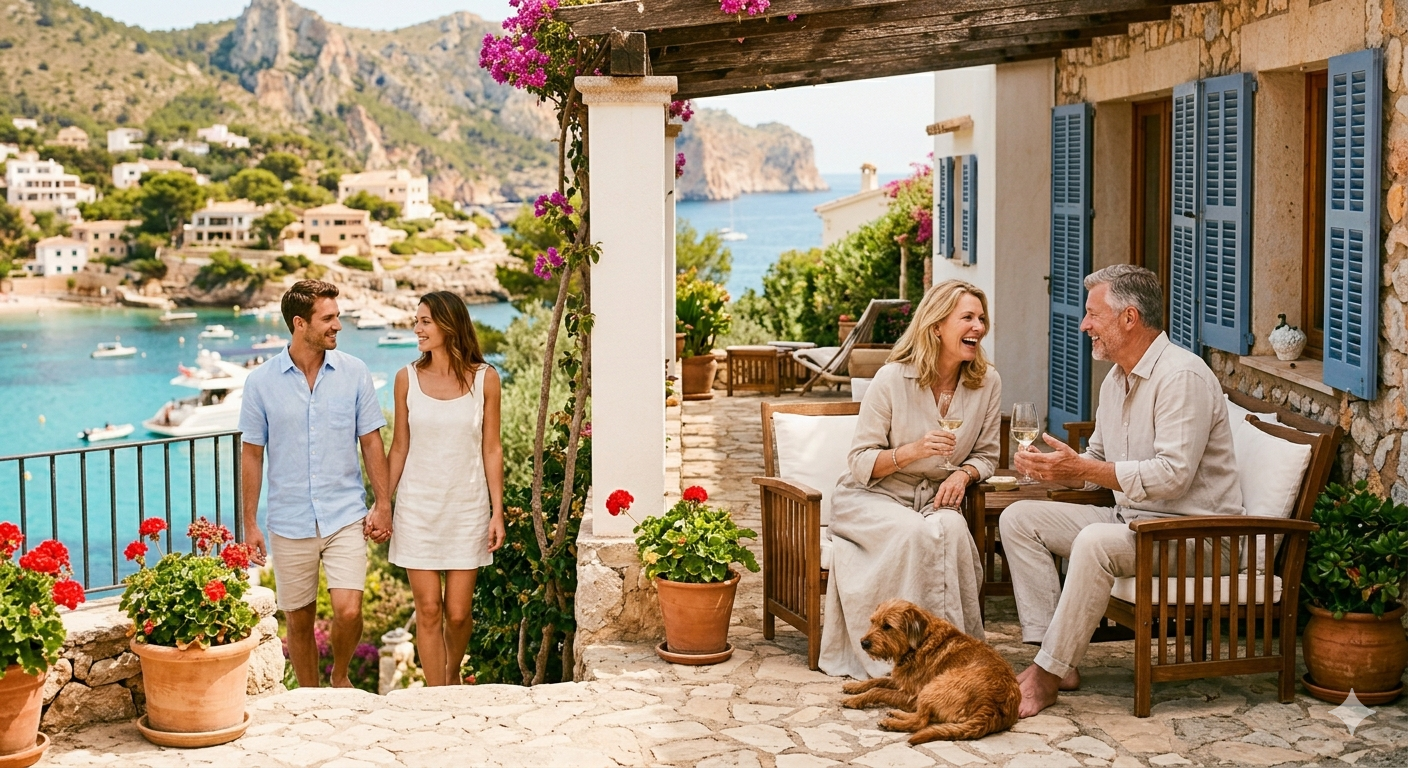

According to the Fotocasa Balearic Islands Housing Report, the purchase of homes by resident and non-resident foreigners represents between 30% and 40% of the total transactions in the archipelago

What percentage of the foreign population is in Mallorca?

On the island of Mallorca, one in five people is already of foreign origin, which accounts for 21.25% of total residents according to official INE figures for the financial year 2025. The volume of international citizens has grown exponentially, adding 34,063 new foreign residents in the last five years compared to just 16,400 new residents of Spanish origin. This global opening phenomenon intensifies in high-value residential areas: in towns like Deià, in the heart of the Serra de Tramuntana, foreigners already make up 36.39% of the census, while in municipalities like Calvià the figure reaches 33.82% as of 2025. On the opposite spectrum, towns like Marratxí maintain a lower international pressure with records not exceeding 10%.

How many foreigners reside in Ibiza and Formentera?

The island of Ibiza is recognized today as a markedly international environment, where one-third of its residents are foreigners. According to the 2025 census records analyzed by SIT Ibiza (Consell Insular d’Eivissa), 32% of the 164,265 inhabitants were born outside of Spain, consolidating a global community where markets like the US already represent 5.2% of the total visitors and residents. This demographic reality, where citizens from Italy, the United Kingdom, and Germany coexist, makes Ibiza the island with the highest multiculturalism ratio in the archipelago, with a brand that attracted more than 154 million internet searches during the last year.

How many foreigners live in Menorca?

Living in Menorca means integrating into an island where 21% of the population was born outside of Spain, reaching the highest figure in its historical series according to the INE with data from January 2025. It is relevant to note that Menorca gained 1,403 new residents last year, of which exactly half (701 people) were foreign citizens. Currently, 21,426 people born abroad live together on the island, a group that has doubled in the last 20 years and confirms Menorca’s trend as a refuge destination for international residents seeking safety and calm.

3 things you must keep in mind before buying a house in the Balearic Islands

Before launching into the search for your home on the islands, there are three administrative and fiscal factors that will shape your budget and the security of your purchase.

1. Taxes: ITP vs. VAT

In Spain, the tax burden depends on the type of housing. If you buy a second-hand house, you will pay the Property Transfer Tax (ITP), which in the Balearics is progressive (8% to 13%), although there are reduced rates of 2% or 4% for primary residences for certain groups. If the property is a new build, you will pay VAT (10%) and Stamp Duty (AJD). Remember that you must add notary, registry, and management fees to this.

2. Essential documentation

To buy a house in Spain, and specifically on the islands, you will mandatory need your DNI or NIE (if you are a foreigner), the Nota Simple from the Property Registry to check for liens, and the Energy Performance Certificate. In addition, it is vital to verify that the property is up to date with IBI tax payments and community fees.

3. The “island factor”: Certificate of Occupancy and Legality

In the Balearics, it is critical to check the current Certificate of Occupancy (Cédula de Habitabilidad) and the Certificate of No Urban Planning Infraction. Many properties in rural areas may have un-legalized extensions; buying without verifying this could prevent you from applying for a mortgage or setting up basic utilities like water and electricity.

Is 2026 a good time to move to the Balearic Islands?

The Balearic Islands stand out for their quality of life and spectacular landscapes. Although prices have grown by 9.1% year-on-year, they are below the national average growth (21.9% year-on-year), according to Fotocasa data. Furthermore, in April 2026, a price drop of -0.8% was recorded compared to the previous month, which could indicate a possible price stabilization.

Although the Balearic Islands remain one of the most expensive regions to buy a house in Spain, prices change a lot depending on the island and the area we choose. Whatever your choice, remember that the key to success on the islands lies in always verifying the urban legality (Certificate of Occupancy) and staying up to date with the price market and all the necessary procedures to buy a home.

If you want to know more about paperwork, we recommend our article on “The 10 documents you need to know before buying your house in Spain”.

And you, on which of these islands do you imagine yourself living your next chapter? Tell us in the comments!

At Fotocasa, we have an excellent team of professionals dedicated to creating relevant content for our readers. If you enjoyed this article, we would be delighted if you published it on your website. In that case, please remember to credit Fotocasa as the original source. Thank you for your support.

Editorial Integrity of Fotocasa Life

0 Comentarios
Más antiguo
El mas nuevo