Disadvantages of living in Elche
- The stifling summer heat: Being located inland in the southeastern part of the peninsula, the months of July and August can be very harsh, frequently recording maximum temperatures that exceed 35°C or 40°C.
- Fewer leisure and cultural offerings: Although Elche has a rich cultural and leisure scene, if we want to attend concerts by major artists, musicals, etc., we may have to travel to cities like Madrid or Barcelona.
- Car dependency for the outskirts and villages: Although the urban center is highly walkable and comfortable to navigate on foot, if you decide to live in one of its rural districts or want to go to the beach regularly, you will absolutely need a car to move around easily.
- Fewer job opportunities: According to data from the INE, the employment rate in the Valencian Community is below the national average. Regions such as the Balearic Islands, Madrid, or Catalonia lead the employment rates.
Connections and transport: how far is Elche from Alicante Airport?
The Alicante-Elche Airport is located just 14 kilometers from the city, which amounts to a car ride of approximately 15 minutes. For those who prefer public transport, the bus line connects both points for a cost of between 1 and 2 euros, while a taxi service usually ranges between 26 and 32 euros.
The municipality enjoys excellent land connections thanks to its network of highways, buses, and its two train stations in the urban core. Moving around its streets is extremely simple, as the city center is very compact and flat, ideal for exploring on foot or using its efficient public bicycle sharing service, BiciElx.
What is the lifestyle like in Elche?
Living in Elche is synonymous with immersing yourself in an authentically Mediterranean city where family and community life takes place mainly outdoors. Although it features a vibrant multicultural and university community, most of its inhabitants are locals, which keeps local customs intact.
It is a town with a great balance between leisure and rest, where afternoons lend themselves to strolling through its traditional orchards or enjoying gastronomic terraces. Furthermore, its proximity to coastal hubs allows you to combine working days in its powerful industrial fabric with quick getaways to the beach.
Things to do in Elche: cultural plans, beaches, and nature
The city’s leisure options stand out for their deep historical richness and protected natural landscapes. Among the essentials for any resident are:
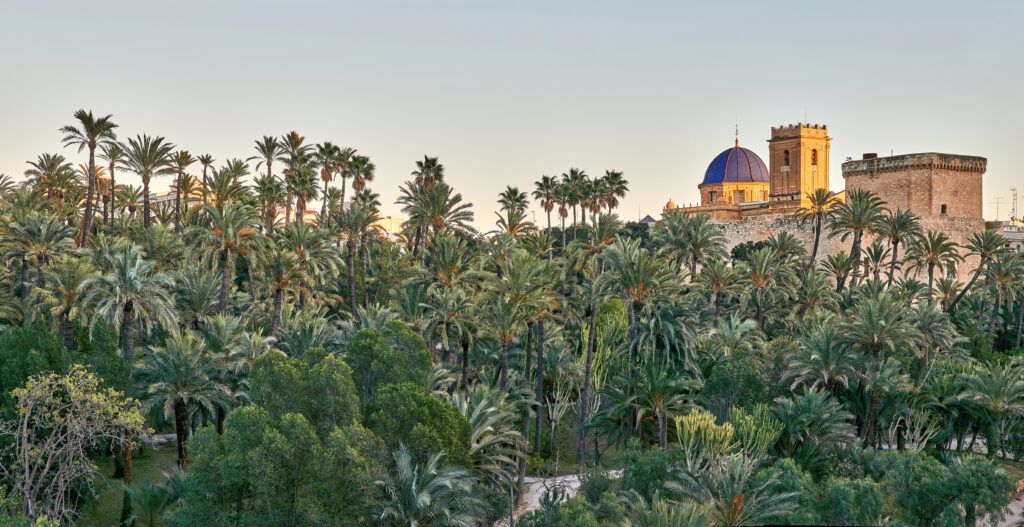
- Strolling through the Huerto del Cura and the Palm Grove: A spectacular botanical garden that houses the famous Imperial Palm, a gem of unique symmetry in the world.
- Visiting the Archaeological Museum (MAHE): Located in the Altamira Palace, it traces the entire history of Elche and was the temporary home of the bust of the Lady of Elche.
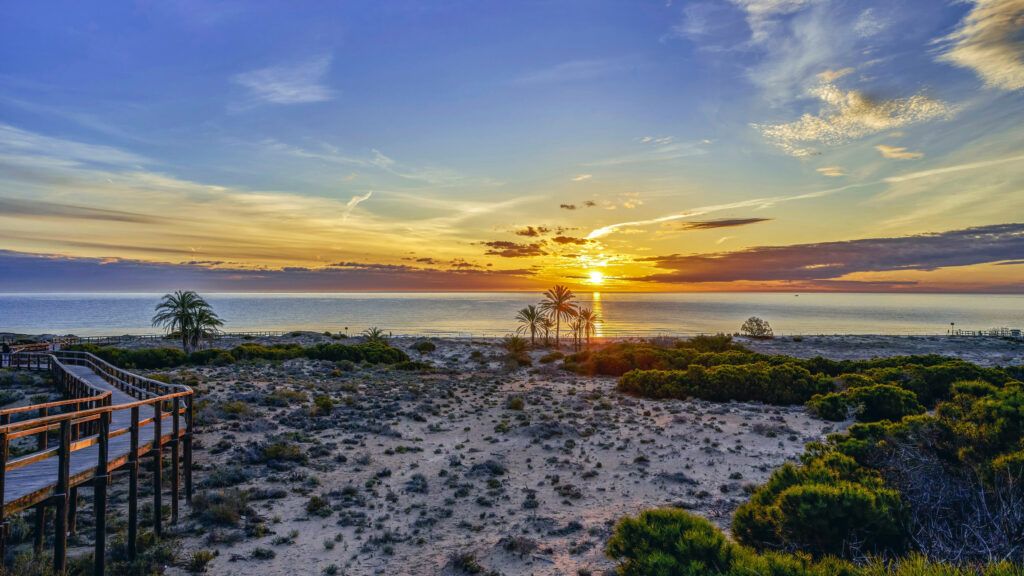
- Enjoying its 12 kilometers of beaches: Just 15 minutes from the center, the coastline offers pristine sandy beaches protected by dunes and pine forests, such as El Altet, Los Arenales del Sol, and La Marina.
- Hiking in the Pantà d’Elx: A natural environment ideal for walks and picnics next to what is considered one of the oldest reservoirs in Europe.
How much does it cost to live in Elche?
The real estate market in Elche is more affordable than that of major Spanish capitals. According to updated Fotocasa data from May 2026, the average price per square meter in the municipality stands at €2,038, which translates into an average of €163,076 for a standard 80 m² property.
Where to live in Elche? A guide to the best neighborhoods
The best neighborhoods to live in Elche adapt to all profiles and budgets, highlighting the historic Center for its services, Altabix for its family atmosphere, and Carrús for being the most affordable option within the urban area.
Living in the historic Center of Elche
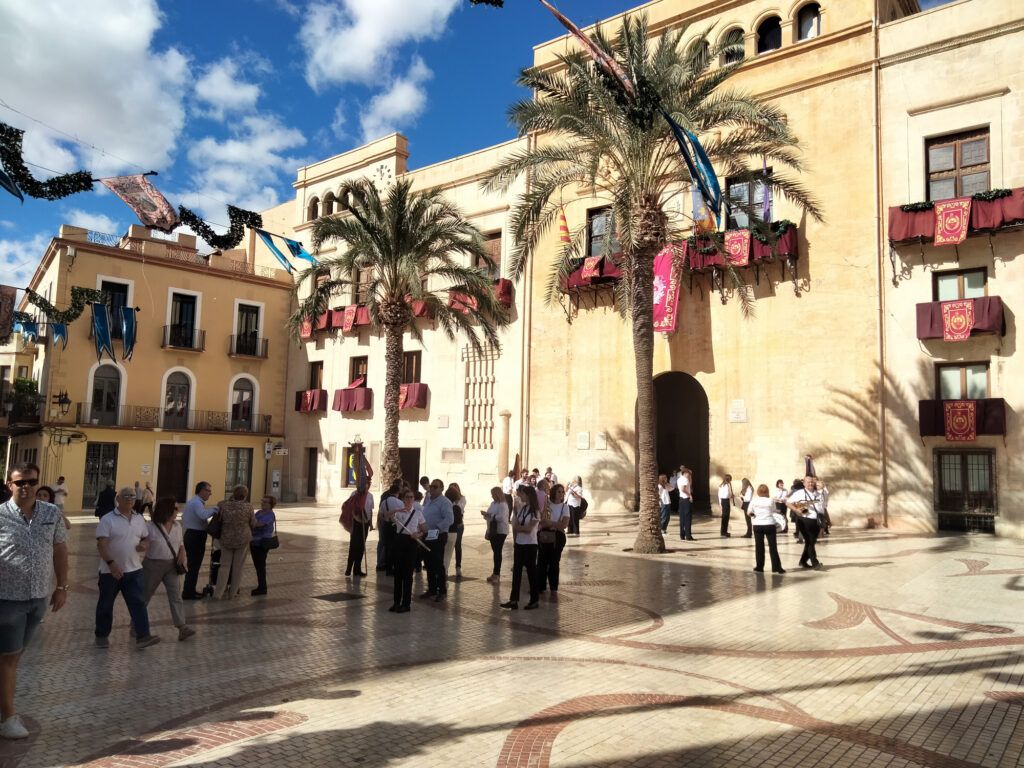
Plaza del Ayuntamiento de Elche – Getty Images
The heart of the city stands out for its great accessibility and its proximity to the main cultural and commercial services. According to Fotocasa data for May 2026, the average price here stands at €2,298/m², which is equivalent to about €183,846 for a standard 80-square-meter apartment.
Living in the neighborhood of Altabix
Altabix is one of the most sought-after residential and family areas in the city due to its dynamic atmosphere. In May 2026, buying a property in this area costs an average of €1,668/m² (around €133,425 for an 80-square-meter property), according to Fotocasa records.
Living in the Ciutat Universitària area
Very close to Altabix, this area stands out for attracting a young audience, students, and professionals. The average cost of housing rises to €2,119/m², which translates exactly to €169,490 for an 80-square-meter apartment, according to Fotocasa data from May 2026.
Neighborhoods of Carrús Este and Carrús Oeste
These are the traditional most affordable and accessible alternatives within the city’s urban core. In Carrús Este the average price is €1,304/m² (€104,345 for 80 square meters), while in Carrús Oeste it stands at €1,460/m² (€116,814 for 80 square meters), according to Fotocasa in May 2026.
Living in the Neighborhood of San Crispín
This traditional neighborhood stands out for its tranquility, its marked working-class character, and its competitive prices. The square meter stands at an average of €1,351/m², which implies an outlay of €108,065 for an 80-square-meter property, according to Fotocasa data for May 2026.
What is it like to live in Sector V of Elche
Sector V of Elche is a highly commercial area, well-established and perfectly connected with the rest of the municipality. The price of housing is set at €1,808/m² in May 2026, which is equivalent to €144,602 for a standard 80-square-meter apartment, according to Fotocasa records.
Living in the Reina Victoria – Miguel Hernández area
This major urban axis combines high daily activity with an excellent range of services for the resident. Buying a home in this area costs an average of €1,677/m² (about €134,169 for 80 square meters), according to Fotocasa statistics for May 2026.


![How much does it cost to buy a house in Spain? [2026]](https://www.fotocasa.es/fotocasa-life/wp-content/uploads/2020/01/How-much-does-it-cost-to-buy-a-house-in-Spain-355x230.png)



 Your home in Spain