
How to send money to Spain to pay your mortgage if you live abroad

Fotocasa is the expert real estate portal if you are looking for your home in Spain and want to resolve your doubts about housing

Patricia Andrés
Patricia Andrés Experta en el sector inmobiliario

Promedio de puntuación 5 / 5. Recuento de votos: 1

Hasta ahora, ¡no hay votos!. Sé el primero en puntuar este contenido.

In Spain, buying property as a foreigner is not something occasional or anecdotal. In the third quarter of 2025, transactions carried out by foreign buyers accounted for 13.58% of total property sales, according to the latest report from the Registro de la Propiedad. This figure confirms the significant role non-residents play in the Spanish real estate market.

When we buy a home in Spain while living abroad, it is not enough to simply know that the instalment must be paid. It is important to understand how to send money to Spain to pay your mortgage, what options are available and how to do it in an organised way to avoid penalties, surcharges or unnecessary costs.

At Fotocasa, we explain what you need to bear in mind if you have a mortgage in Spain and live abroad, and how to properly plan the monthly transfer of funds.

Where is a mortgage paid if the property is in Spain?

If we buy a property in Spain and need financing, the usual practice is for the mortgage to be taken out with a Spanish bank.

This happens because:

  • The property is located in Spanish territory.

  • The loan is secured against that property.

  • The lending institution must be able to register the mortgage with the Registro de la Propiedad in Spain.

A mortgage is a loan secured against the property itself. Therefore, when the property is in Spain, the process is formalised within the Spanish financial and land registry system.

In addition, many Spanish banks offer specific products for non-residents who want to purchase a property in the country.


If the property is in Spain, the financing is also formalised in Spain and repaid in accordance with Spanish regulations.

This means that, regardless of where we live, the instalments are managed from Spain.

Do I need to open a bank account in Spain?

In practice, it is the most convenient option.

In Spain, a mortgage is usually paid by direct debit, meaning the bank automatically withdraws the monthly instalment from an account linked to the loan.

Typically:

  • The instalment is paid monthly.

  • The bank automatically debits the agreed amount on the set date.

  • There must be sufficient funds in the account.

For this reason, it is most common for the owner to have a bank account opened in Spain linked to the mortgage.

In Spain, there are bank accounts with no fees or maintenance charges, so it is advisable to carefully review the terms before opening one.

A bank account in Spain is not only used to pay the mortgage, but also to manage all expenses associated with the property.

It is also important to bear in mind that this same account can be used to pay other expenses related to owning a property in Spain, such as:

  • The IBI (Impuesto sobre Bienes Inmuebles).

  • The waste collection tax.

  • Utility bills or homeowners’ association fees.

Having a Spanish account makes it easier to manage all these recurring expenses and allows you to centralise all payments linked to the property.

What happens if the monthly instalment is not paid?

If there are insufficient funds in the account on the day the bank attempts to collect the instalment:

  • The payment may be returned unpaid.

  • Late payment interest may be applied.

  • The bank may claim the outstanding amount.

If the non-payment continues over time, a mortgage foreclosure procedure may be initiated.

That is why it is essential to carefully plan money transfers if we live abroad.

How to send money to Spain to pay your mortgage if you live abroad?

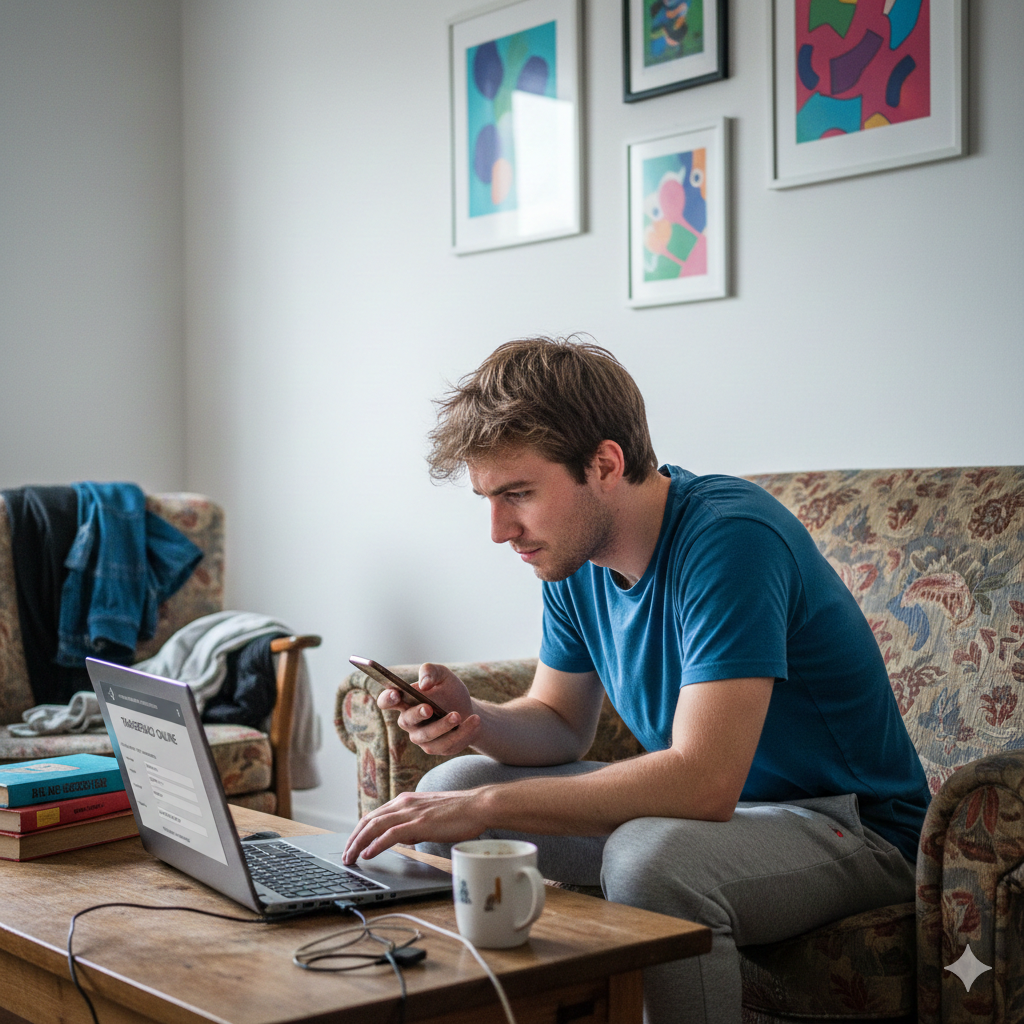
If we live abroad and have a mortgage in Spain, we must ensure that the money reaches the Spanish account before the day the bank debits the instalment.

It is not just about making a transfer. It is about choosing carefully how we send the money, how much we send and when we do it.

There are several ways to send money to Spain from abroad to pay your mortgage, and each has advantages and disadvantages.

Traditional international bank transfer

This is the most common and widely known option.

It involves making a transfer from our overseas account to our bank account in Spain, using the IBAN and the SWIFT/BIC code of the Spanish bank.

Its advantages include:

  • It is a secure option backed by banking institutions.

  • It allows you to send the money directly to the account where the mortgage is debited.

  • It is simple if you already use online banking.

  • There are currently several options in Spain for fee-free bank accounts.

However, it is advisable to review certain aspects before using this method:

  • It may take several days to arrive.

  • It may involve transfer fees.

  • If you send money in another currency, the exchange rate is set by the bank.

If you are paid in another currency, it is important to check the exchange rate applied by your bank. A small difference in the rate can mean paying more for the same instalment.

If we are paid in a currency other than the euro, the exchange rate can directly affect the real cost of our mortgage.

Before making the transfer, it is advisable to check with your bank how long it takes to process and what fees apply.

Specialised international money transfer services

Another option for paying your mortgage from abroad is to use specialised international money transfer platforms.

Some of these services may offer:

  • More competitive exchange rates.

  • Lower fees.

  • Faster transfers.

  • The option to schedule recurring payments.

This can be useful if we need to send money every month to cover the mortgage instalment.

In these cases, it is important to compare the conditions and check:

  • Which exchange rate is applied.

  • What final fee is deducted.

  • How long it takes for the money to reach the Spanish account.

Comparing the exchange rate and the fees can help us reduce the monthly cost of sending money to Spain to pay the mortgage.

Send a larger amount and maintain sufficient funds

Some people who live abroad choose not to send money every month.

Instead:

  • They send a larger amount from time to time.

  • They leave several instalments covered in the Spanish account.

  • They maintain a small safety buffer.

This can provide peace of mind, especially if:

  • The exchange rate is favourable at a given time.

  • There is a risk of delays in transfers.

  • We want to avoid the instalment being returned due to insufficient funds

What should you bear in mind if you are paid in another currency?

If our mortgage is in euros but our income is in another currency, we are exposed to exchange rate fluctuations.

If our currency loses value against the euro, we will need to send more money to pay the same instalment.

This does not mean the mortgage has increased, but rather that currency exchange makes the real cost higher in our own currency.

The opposite can also happen: if our currency strengthens, sending money may be more affordable.

That is why it is important to:

  • Check the exchange rate before each transfer.

  • Calculate with a sufficient margin.

  • Avoid adjusting the transfer down to the last cent.

Tips for paying your mortgage in Spain if you live abroad

If we have a mortgage in Spain and reside in another country, it is advisable to organise payments carefully to avoid issues.

Planning transfers in advance and anticipating deadlines is key to avoiding surcharges and problems with the bank.

Some practical recommendations:

  • Schedule the transfer well in advance.

  • Confirm that the money has arrived before the debit date.

  • Maintain a small buffer in the Spanish account.

  • Regularly review fees and the exchange rate.

  • Take into account other property-related expenses, such as taxes and bills.

Because in addition to the mortgage instalment, a property in Spain may generate other recurring payments that we must also plan for.

Having a mortgage in Spain while living abroad means paying close attention to how we send the money each month.

It is not enough to make a one-off transfer. It is important to review the exchange rate, fees, processing times and ensure that the Spanish account always has sufficient funds.

At Fotocasa, we remind you that organising money transfers in advance to pay your mortgage in Spain can help avoid late payment interest and potential issues with the bank.

At Fotocasa, we have an excellent team of professionals dedicated to creating relevant content for our readers. If you enjoyed this article, we would be delighted if you published it on your website. In that case, please remember to credit Fotocasa as the original source. Thank you for your support.

Editorial Integrity of Fotocasa Life

0 Comentarios
Más antiguo
El mas nuevo
Comentarios en línea
Ver todos los comentarios