Living in Spain: 20 things you need to know before packing your bags

Fotocasa is the expert real estate portal if you are looking for your home in Spain and want to resolve your doubts about housing

Patricia Andrés
Patricia Andrés Experta en el sector inmobiliario

5/5. Votos: 1

Hasta ahora, ¡no hay votos!. Sé el primero en puntuar este contenido.

  • In Spain, the main meal is lunch, and dinner is rarely eaten before 9:00 PM.
  • The National Health System (SNS) ranks among the top 20 worldwide according to The Lancet, accessible via Social Security contributions or private insurance.
  • Key administrative procedures such as the padrón, NIE, and taxation on worldwide income after 183 days require a mandatory prior appointment and sometimes official certified translations.

Spain is a country with unique customs that often surprise many foreigners who move here to live.

At Fotocasa, we explain 20 things you need to know before moving to Spain. From how Spaniards manage their daily schedules to how to handle the main paperwork required to relocate to Spain.

Did you know that paella is rarely eaten for dinner in Spain?

What are the 20 things you should know before moving to Spain?

To integrate successfully into Spain, it is essential to embrace both daily habits and the administrative framework that governs access to rentals and formal residency. Below, we break down point by point the most relevant realities to help you plan your move.

1. Paella is never for dinner: lunch is the main meal

In Spain, the main meal of the day is midday lunch. Although many tourists (whom locals refer to as “guiris”) eat paella for dinner, paella is typically a dish reserved for lunchtime. In many restaurants, tradition calls for eating it on Thursdays, although it is also very common to enjoy it on weekends or at family gatherings.

2. Spain has 2 official time zones: mainland (GMT+1) and the Canary Islands (GMT+0)

Spain has two distinct official time zones within its borders. The Iberian Peninsula and the Balearic Islands operate on GMT+1, while the Canary Islands follow GMT+0.

This mainland time discrepancy dates back to the Second World War and largely explains why daylight extends so late into the evening. In addition, Spain changes the clocks twice a year.

3. The siesta myth: what the working day really looks like in Spain

If you tell a Spanish office worker that they take a siesta, you will likely get a raised eyebrow. Despite the persistent myth, not everyone takes a siesta in Spain. In fact, according to a 2017 SimpleLógica survey, nearly 60% of Spaniards state that they never nap.

While it is true that some shops close in the middle of the day, in office environments it is standard practice to take a lunch break of just one hour.

4. Mealtimes are later: lunch at 2:00 PM and dinner at 9:00 PM or later

Mealtimes in Spain take place significantly later than the European average. Midday lunch is usually served between 2:00 PM and 3:00 PM, while dinner rarely starts before 9:00 PM.

Restaurants tailor their opening hours to this routine, so if you head out to eat at 6:00 PM, you will most likely find the kitchen closed.

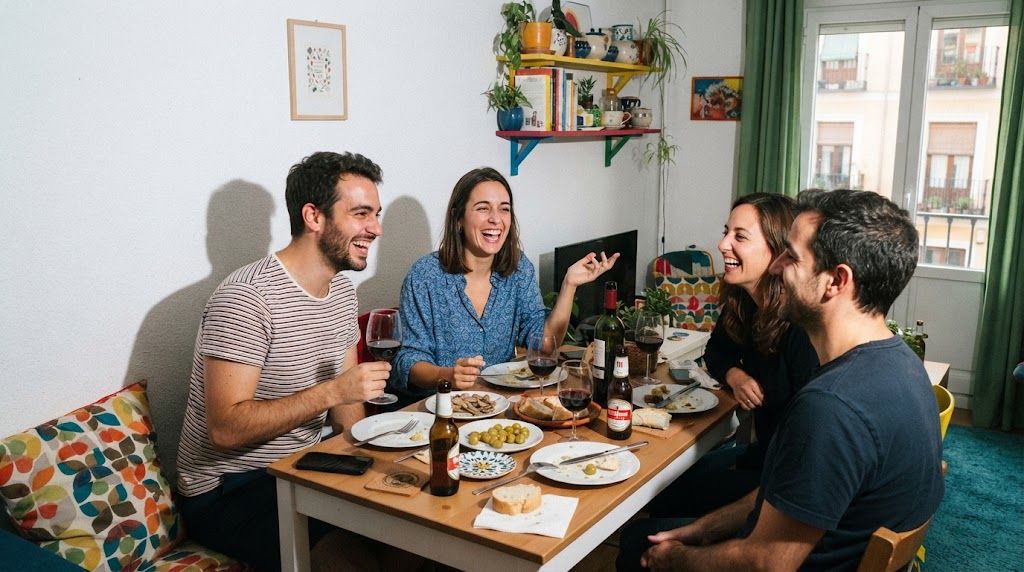
In Spain, lunch is the main meal of the day, while dinner is typically pushed back until after nine at night.

5. Social life happens on the street: bars, terraces, and the “sobremesa”

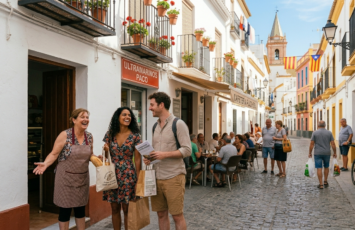
Unlike other European countries where people often invite guests into their homes, in Spain, social life takes place on the street. Bars, squares, and outdoor terraces are the natural meeting point at any time of the week.

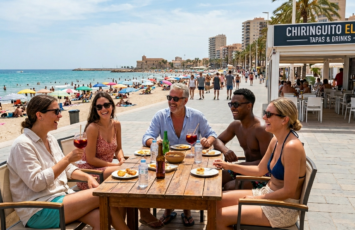
Once the meal is finished, la sobremesa is sacred: the custom of lingering around the table chatting for minutes or hours over a coffee or a drink.

6. In Spain, people greet each other with two kisses

When meeting someone in a social or casual setting, the standard greeting in Spain is to give two kisses on the cheeks. This does not imply prior personal intimacy, but is rather a standard everyday social courtesy.

In strictly corporate or business environments, a formal handshake remains the standard practice.

7. Direct conversations and loud voices: interruptions are not considered rude

The communication style in Spain is expressive, spontaneous, and noticeably louder than in Northern Europe.

Interrupting someone mid-sentence during a conversation is not perceived as impolite, but rather as an active sign of engagement and interest in the discussion.

Verbal directness takes precedence over excessive formalities or beating around the bush in both business and personal interactions.

8. There is life beyond sangria: how to order a drink at a bar in Spain

Sangria is usually reserved for summer gatherings or tourist spots, while locals primarily drink beer, wine, vermouth, or “tinto de verano” (some regions also have local drinks like “rebujito”).

Beer is rarely ordered by the pint; it is typically ordered as a “caña” (small draught glass), a “tercio” (33 cl bottle), or a “quinto” (20 cl bottle).

Important: the way you order beer changes depending on where you are. In some areas, for instance, a 33 cl bottle is called a “tercio”, while in others it is known as a “mediana”.

9. In Spain, the night starts late (though you can also go “tardeo”)

Spanish nightlife kicks off considerably later than in other European Union countries. Nightclubs stay open until 6:00 AM, and hardly anyone arrives before 2:00 AM. If you prefer not to stay out that late, many cocktail bars and pubs stay open until 3:00 AM.

For those who prefer daytime socializing, the tardeo trend has firmly taken hold, where music and drinks start in the late afternoon and wrap up around midnight.

10. Spaniards have two surnames (and keep their surname when getting married)

In Spain, everyone has two official surnames on their identification documents: the first typically comes from the father and the second from the mother.

Upon getting married, women keep their own birth surnames throughout their lives, without legally taking their husband’s name.

Unlike in other countries, in Spain it is customary to have just a single first name.

11. Four official languages and a mosaic of regional identities

Castilian Spanish is the official language across the entire country, but it coexists with three other widely spoken co-official languages: Catalan (and its Valencian variant), Galician, and Basque (Euskera).

Learning the local language is essential for integrating, especially away from tourist hubs, as around 60% of Spaniards do not speak English according to 2017 CIS data.

In Spain, four official languages coexist alongside Spanish, giving each region its own distinct cultural identity.

12. Autonomous Communities with extensive powers and a Parliamentary Monarchy

Spain is a decentralised state organised into 17 Autonomous Communities with broad exclusive powers over healthcare, education, and housing policies. At a political level, it operates under a parliamentary monarchy where the King serves as Head of State and the President of the Government holds executive power.

This means that many regulations regarding renting, regional taxes, and housing requirements vary depending on the community where you decide to settle.

13. It is not always warm in Spain: from the humid north to the cold interior

There is a widespread misconception that constant sunshine reigns throughout Spain, and it is common to see tourists freezing in shorts in the middle of winter. Aside from subtropical exceptions like the Canary Islands, winter on the mainland is cold and requires proper warm clothing.

Along the northern Cantabrian coast, rain is frequent and summers are mild, whereas southern cities like Cordoba or Seville record summer peaks exceeding 45 °C.

14. Local neighbourhood festivals: plenty of free activities to enjoy

In Spain, there are countless free activities out on the streets. Almost every town, neighbourhood, or district celebrates its annual fiesta, organised by town halls or neighbourhood associations, featuring live concerts, open-air dances, and street events.

If you want to keep up with all the free events taking place in your city, check your local town hall website, consult neighbourhood associations, or browse magazines like Time Out.

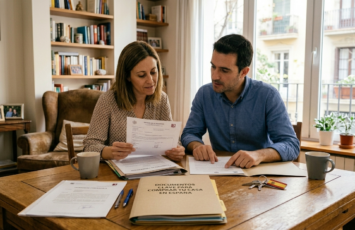
15. Demanding bureaucracy: the importance of appointments and certified translations

For virtually any administrative process in Spain, it is standard practice to be asked for several printed documents and to book a prior appointment (“cita previa”). Procedures such as registering on the municipal census (el padrón) or obtaining a NIE require booking an appointment well in advance.

For any foreign document to hold legal validity in Spain, it must carry the appropriate apostille and be translated by an official certified translator.

16. If you are a tax resident, you must pay taxes in Spain: the 183-day rule

If you spend more than 183 days in Spanish territory within the same calendar year, the Tax Agency will consider you a tax resident for all legal intents and purposes.

Being a tax resident means that you will be required to pay tax in Spain on your worldwide income, not just on the earnings generated within the country.

17. High-quality SNS public healthcare vs. private healthcare

The National Health System (SNS) provides first-class, comprehensive public healthcare coverage, ranking among the top 20 healthcare systems in the world according to The Lancet.

Access to the SNS is guaranteed for residents who work and contribute to Social Security, whereas those who do not contribute or who apply for non-lucrative visas must hold full-coverage private health insurance.

18. Drinking on the street is prohibited

This may come as a surprise because it is very common to see people drinking on the street in Spain, and Spaniards even have a term for gathering to drink outdoors (the well-known “botellón”), but it is technically prohibited and you can be fined for it.

During many local patron saint festivals or public events, the town hall makes exceptions and authorises the sale of drinks outdoors.

19. The August shutdown

August is the most common month for summer holidays in Spain. Many offices, shops, and public institutions close down during the summer, so if you have urgent paperwork to sort out, we recommend handling it beforehand.

In addition, Spaniards love to travel, and certain inland cities empty out considerably in summer, while coastal areas are often packed.

20. Make the most of the “menú del día”

Many Spanish restaurants offer weekday lunchtime set menus at much more affordable prices, usually with generous portions. They typically include a starter, a main course, and dessert, and the quality of the food is identical to what you would find on the regular à la carte menu.

These are fixed-price menus offering several choices that usually change daily. They are the ideal option if you want to try new places and save a few euros.

The first formalities you need to complete when moving to Spain

Procedure Where to do it Main requirement You need it for…
NIE Number Immigration Office (Extranjería) Confirmed prior appointment Official tax identification
TIE Card Police Station Residency approval resolution Proof of legal stay/residency
Opening a bank account Bank branch Passport or NIE Direct debits and salary deposits
Health card Primary Healthcare Centre Padrón registration and Social Security registration Access to public healthcare

Source: Fotocasa, 2026

We strongly recommend sorting out your NIE as soon as you arrive in Spain (or even beforehand through the Spanish consulate in your home country). You will need this number for virtually everything, so obtaining it should be your top priority.

If your stay is not temporary and you plan to become a resident, it is equally important to apply for your TIE (foreign identity card). In addition, we recommend opening a bank account as soon as possible (many banks let you open an account online) and requesting your health card at your nearest Primary Healthcare Centre (CAP) so you can receive care if a medical emergency arises.

Have questions about relocation paperwork? We recommend our guide “Moving to Spain: the ultimate guide for expats“

At Fotocasa, we have an excellent team of professionals dedicated to creating relevant content for our readers. If you enjoyed this article, we would be delighted if you published it on your website. In that case, please remember to credit Fotocasa as the original source. Thank you for your support.

Editorial Integrity of Fotocasa Life

0 Comentarios
Más antiguo
El mas nuevo
↑